Forum
    • Categories
    • Register
    • Login
    1. Home
    2. griffinboy
    • Profile
    • Following 9
    • Followers 12
    • Topics 119
    • Posts 1,068
    • Groups 1

    griffinboy

    @griffinboy

    Beta Testers

    547
    Reputation
    322
    Profile views
    1.1k
    Posts
    12
    Followers
    9
    Following
    Joined
    Last Online

    griffinboy Unfollow Follow
    Beta Testers

    Best posts made by griffinboy

    • [Free Dsp] Analog Filter (24dB/oct)

      C++ analog filter node based on this paper:
      https://www.researchgate.net/publication/344876889_Moog_Ladder_Filter_Generalizations_Based_on_State_Variable_Filters

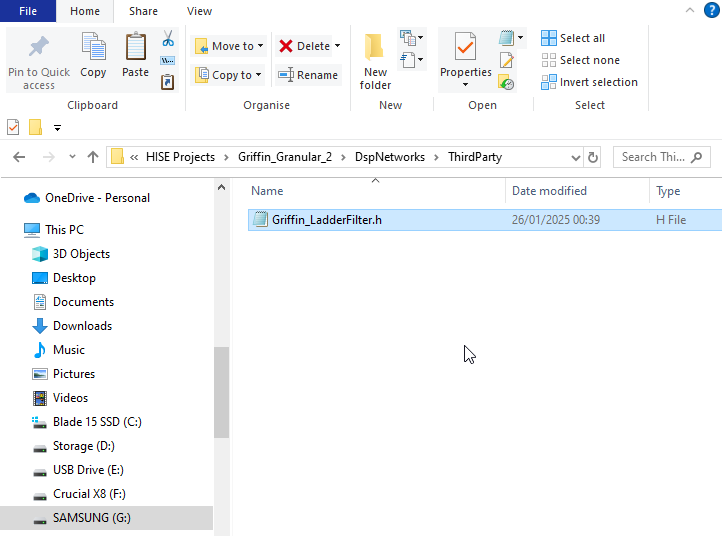
      To use it in a Hise project, open your project folder and place the script file (Griffin_LadderFilter.h) under:
      DspNetworks > ThirdParty

      e42f5f06-2019-435a-b3aa-53af5d916733-image.png

      Then open your Hise project and compile dsp networks as dll

      9cff98b4-dfb6-4981-8446-bb2e2b0deb05-image.png

      Now press OK, and you will be able to use the Node:

      566a05d5-188e-438f-9f83-cff680d55493-image.png

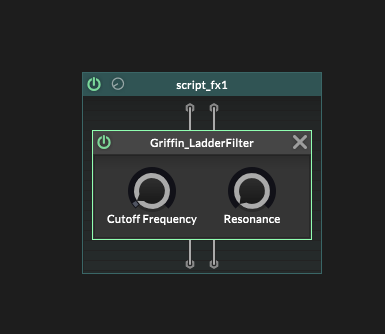
      The node should appear under the 'project' category when you open the scripnode node browser.

      Download the script here:

      Polyphonic (stereo):
      https://1drv.ms/u/c/6c19b197e5968b36/EYVQsJa9FlpKldok2ThVUwMBVf3KnemfEeccDyzASGbGJw?e=XNq1PU

      Monophonic (stereo):
      https://1drv.ms/u/c/6c19b197e5968b36/EcGw46UnqYJMk1cu3bH2QZQBSWTXAOL6ggsusNrF-LrtZQ?e=FvMeGr

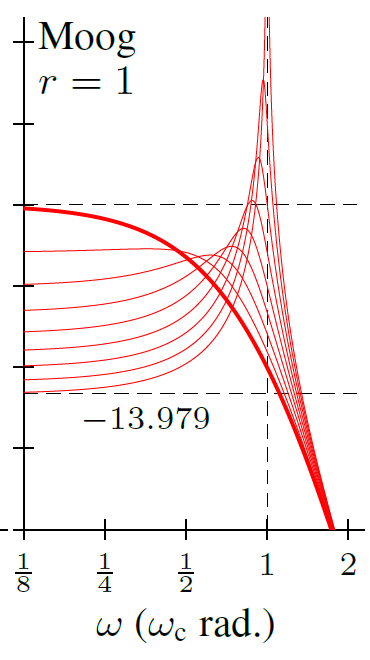
      24dB / Octave Filter Response:

      9537ba2d-197d-435b-b862-998dbf3ae7bd-image.png

      posted in ScriptNode
      griffinboyG
      griffinboy
    • [Tutorial] How to create a c++ custom node

      How to create a custom node, as promised.
      I apologise in advance for the awful quality video (quite dry and boring)! But the good news is that I have some nicer quality ones in the pipeline. However I thought I should get this out as soon as possible since some people were waiting on it.
      Hope it helps.

      Windows only, I'll do a mac tutorial later.

      https://youtu.be/SLQv0Bkte7I

      Template v1.1:

      // ==========================| NodeTemplate v1.0 : by Griffinboy |==========================
      
      #pragma once
      #include <JuceHeader.h>
      
      namespace project
      {
          using namespace juce;
          using namespace hise;
          using namespace scriptnode;
      
          template <int NV>
          // --- Replace with Name 
          struct ExternalNodeTemplate : public data::base
          {   // ------ Replace with Name 
              SNEX_NODE(ExternalNodeTemplate);
      
              struct MetadataClass
              { // --------- Replace with "Name"
                  SN_NODE_ID("ExternalNodeTemplate");
              };
      
              // ==========================| Node Properties |==========================
              static constexpr bool isModNode() { return false; }
              static constexpr bool isPolyphonic() { return NV > 1; }
              static constexpr bool hasTail() { return false; }
              static constexpr bool isSuspendedOnSilence() { return false; }
              static constexpr int getFixChannelAmount() { return 2; }
      
              static constexpr int NumTables = 0;
              static constexpr int NumSliderPacks = 0;
              static constexpr int NumAudioFiles = 0;
              static constexpr int NumFilters = 0;
              static constexpr int NumDisplayBuffers = 0;
      
              // ==========================| Global Variables |==========================
      
              // ==========================| Prepare |==========================
              // Called on init, and when sample rate changes
              void prepare(PrepareSpecs specs)
              {
                  float sampleRate = specs.sampleRate;
                  float numChannels = specs.numChannels;
      
                  leftChannelEffect.prepare(sampleRate, 5.0); // 5ms smoothing on the gain parameter
                  rightChannelEffect.prepare(sampleRate, 5.0);
              }
      
              // ==========================| Reset |==========================
              // Called when the plugin is reloaded
              void reset() {}
      
              // ==========================| Process |==========================
              // Blocks of audio enter the script here
              template <typename ProcessDataType>
              void process(ProcessDataType& data)
              {
                  // Convert the audio data to a fixed-channel format for efficient processing
                  auto& fixData = data.template as<ProcessData<getFixChannelAmount()>>();
      
      			// Get pointers to each channel's audio data
                  // Changes to these variables will now directly modify the original audio buffer
                  auto audioBlock = fixData.toAudioBlock();
                  auto* leftChannelData = audioBlock.getChannelPointer(0);
                  auto* rightChannelData = audioBlock.getChannelPointer(1);
      
                  // Get the number of samples (one channel) for this block
                  int numSamples = data.getNumSamples();
      
                  // Pass each channel's audio to the appropriate AudioEffect class
                  leftChannelEffect.process(leftChannelData, numSamples);
                  rightChannelEffect.process(rightChannelData, numSamples);
              }
      
              // ==========================| AudioEffect Class |==========================
              class AudioEffect
              {
              public:
                  AudioEffect(float initialGain = 1.0f)
                  {
                      smoothGain.set(initialGain); // Initialize sfloat with initial gain
                  }
      
                  void prepare(double sampleRate, double timeInMilliseconds)
                  {
                      smoothGain.prepare(sampleRate, timeInMilliseconds);
                  }
      
                  void process(float* samples, int numSamples)
                  {
                      for (int i = 0; i < numSamples; ++i)
                      {
                          samples[i] *= smoothGain.advance(); // Apply the gain using the smoothed parameter
                      }
                  }
      
                  void updateGain(float newGain)
                  {
                      smoothGain.set(newGain);
                  }
      
              private:
                  sfloat smoothGain; // Declare smoothGain variable, using sfloat type for smoothing
              };
      
              // ==========================| Set Parameter |==========================
              template <int P>
              void setParameter(double v)
              {
                  if (P == 0)
                      leftChannelEffect.updateGain(static_cast<float>(v)); // Update gain for left channel
                  else if (P == 1)
                      rightChannelEffect.updateGain(static_cast<float>(v)); // Update gain for right channel
              }
      
              // ==========================| Create Parameters |==========================
              void createParameters(ParameterDataList& data)
              {
      
                  {   //                             { min, max,  step }                 { id } 
                      parameter::data p("Left Gain", { 0.1, 2.0, 0.01 }); registerCallback<0>(p);
                      p.setDefaultValue(1.0);
                      data.add(std::move(p));
                  }
                  {
                      parameter::data p("Right Gain", { 0.1, 2.0, 0.01 });
                      registerCallback<1>(p);
                      p.setDefaultValue(1.0);
                      data.add(std::move(p));
                  }
              }
      
              // ==========================| External Data |==========================
              void setExternalData(const ExternalData& data, int index) {}
      
              // ==========================| Handle HISE Event |==========================
              void handleHiseEvent(HiseEvent& e) {}
      
              // ==========================| Modulation Slot |==========================
              // ( first enable isModNode() at the top of script ) 
              /*
                  ModValue modValue;
                  int handleModulation(double& value)
                  {
                      return modValue.getChangedValue(value);
                  }
                  // Creates callback so that altering the 'modValue' var elsewhere will now update the mod slot
                  modValue.setModValue(0);
              */
      
              // processFrame: Needed for compiler, does nothing
              template <typename FrameDataType>
              void processFrame(FrameDataType& data) {}
      
          private:
              AudioEffect leftChannelEffect;
              AudioEffect rightChannelEffect;
          };
      }


      14434c25-0fb6-4abd-bcc3-10cdc249cdd1-image.png

      posted in Blog Entries
      griffinboyG
      griffinboy
    • [Free Dsp] Oberheim-8 Analog Filter

      Polyphonic 12db/oct Filter with keytracking.

      Created from a linear (non saturating) analysis of the OB8 lowpass.
      It's not a match for high resonance settings, but it has good intuition at low resonance. You are welcome to tune it further by modifying the code.

      CPU usage: ≈1%

      27f9a3b7-c78b-4610-b029-965bb2b4da1d-image.png

      Instructions for setup included inside the script.
      The "Eigen" header library is required:
      https://github.com/PX4/eigen

      Download the Filter Script here:
      https://1drv.ms/u/c/6c19b197e5968b36/ER8vuJpevI9Htt_WY8Mqs8sBBJ15n8JLf-MJdSNgwjZX5g?e=zXd7gZ

      Raw Code:

      #pragma once
      #include <JuceHeader.h>
      #include <cmath>
      #include "src\eigen-master\Eigen\Dense"
      
      
      /**
       
      ==============| by GriffinBoy (2025) |==============
      
      This node implements an OB8 2-SVF (State-Variable Filter) with global feedback
      using the Delay-Free method as described in DAFx-2020.
      
      Features:
      - Parameter smoothing via Juce's SmoothedValue class
      - Bilinear (TPT) transform implementation
      - Optimized 4x4 matrix inversion using the Eigen library
      - Recalculates matrices only when parameters change (dirty flags)
      - Keytracking support for cutoff frequency
      - (rough) Resonance compensation for frequency shift
      - (rough) Gain compensation for resonance control
      
      Integration Steps for HISE:
      1. Eigen Setup: Download and place the Eigen library under:
         ProjectName/DspNetworks/ThirdParty/src/eigen-master
      2. Create a 3rd party C++ node in HISE named "Griffin_OBFilter"
      3. Compile the initial DLL in HISE using "Compile dsp networks as .dll"
      4. Replace the generated "Griffin_OBFilter.h" (in ProjectName/DspNetworks/ThirdParty)
         with this header file you are reading now
      5. Re-compile the final DLL in HISE using "Compile dsp networks as .dll" 
      
      Continuous-Time System Definition:
        x1'(t) = -2*r*x1 - x2 - kf*x4 + input
        x2'(t) = x1
        x3'(t) = -2*r*x3 - x4 + x2
        x4'(t) = x3
      (Output is taken from state x4)
      
      Bilinear Transform:
        M = I - g*A,   N = I + g*A, where g = 2 * tan(pi * fc / fs)
        (M is inverted using Eigen's optimized fixed-size matrix inversion)
      
      Optimizations:
      - Precomputed reciprocals and constants
      - Eigen fixed-size matrices for 4x4 operations
      - Dirty flags for matrix recalculation only when parameters change
      
      Author: GriffinBoy (2025)
      License: UwU 
      */


      namespace project
      {
          using namespace juce;
          using namespace hise;
          using namespace scriptnode;
      
          template <int NV> // NV = Number of Voices
          struct Griffin_OBFilter : public data::base
          {
              SNEX_NODE(Griffin_OBFilter);
      
              struct MetadataClass { SN_NODE_ID("Griffin_OBFilter"); };
      
              static constexpr bool isModNode() { return false; }
              static constexpr bool isPolyphonic() { return NV > 1; }
              static constexpr bool hasTail() { return false; }
              static constexpr bool isSuspendedOnSilence() { return false; }
              static constexpr int  getFixChannelAmount() { return 2; }
      
              static constexpr int  NumTables = 0;
              static constexpr int  NumSliderPacks = 0;
              static constexpr int  NumAudioFiles = 0;
              static constexpr int  NumFilters = 0;
              static constexpr int  NumDisplayBuffers = 0;
      
              //=========================================================================
              // Parameters (Raw Values)
              //=========================================================================
              float cutoffFrequency = 1000.0f;
              float resonance = 0.0f;    // Range: [0, 35]
              float keytrackAmount = 1.0f;
              float sampleRate = 44100.0f;
      
              //=========================================================================
              // Smoothing Objects for Per-Sample Smoothing
              //=========================================================================
              SmoothedValue<float> cutoffSmooth;
              SmoothedValue<float> resonanceSmooth;
              SmoothedValue<float> keytrackSmooth;
      
              //=========================================================================
              // Prepare Function
              // - Sets up voices and initializes smoothers.
              //=========================================================================
              void prepare(PrepareSpecs specs)
              {
                  sampleRate = specs.sampleRate;
                  filtersLeft.prepare(specs);
                  filtersRight.prepare(specs);
      
                  for (auto& v : filtersLeft)
                      v.prepare(sampleRate);
                  for (auto& v : filtersRight)
                      v.prepare(sampleRate);
      
                  // Set smoothing time (10ms)
                  cutoffSmooth.reset(sampleRate, 0.01);
                  resonanceSmooth.reset(sampleRate, 0.01);
                  keytrackSmooth.reset(sampleRate, 0.01);
      
                  cutoffSmooth.setCurrentAndTargetValue(cutoffFrequency);
                  resonanceSmooth.setCurrentAndTargetValue(resonance);
                  keytrackSmooth.setCurrentAndTargetValue(keytrackAmount);
              }
      
              void reset()
              {
                  for (auto& v : filtersLeft)
                      v.reset();
                  for (auto& v : filtersRight)
                      v.reset();
              }
      
              //=========================================================================
              // Process Audio
              // - Updates parameters per sample using smoothed values.
              //=========================================================================
              template <typename ProcessDataType>
              void process(ProcessDataType& data)
              {
                  auto& fixData = data.template as<ProcessData<getFixChannelAmount()>>();
                  auto audioBlock = fixData.toAudioBlock();
      
                  float* leftCh = audioBlock.getChannelPointer(0);
                  float* rightCh = audioBlock.getChannelPointer(1);
                  int numSamples = static_cast<int>(data.getNumSamples());
      
                  for (int i = 0; i < numSamples; ++i)
                  {
                      // Get per-sample smoothed parameter values
                      float cVal = cutoffSmooth.getNextValue();
                      float rVal = resonanceSmooth.getNextValue();
                      float kVal = keytrackSmooth.getNextValue();
      
                      // Update each voice with new smoothed parameters
                      for (auto& v : filtersLeft)
                      {
                          v.setCutoff(cVal);
                          v.setResonance(rVal);
                          v.setKeytrack(kVal);
                          v.applyChangesIfNeeded();
                      }
                      for (auto& v : filtersRight)
                      {
                          v.setCutoff(cVal);
                          v.setResonance(rVal);
                          v.setKeytrack(kVal);
                          v.applyChangesIfNeeded();
                      }
      
                      // Process sample for each voice in series
                      float outL = leftCh[i];
                      float outR = rightCh[i];
                      for (auto& v : filtersLeft)
                          outL = v.processSample(outL);
                      for (auto& v : filtersRight)
                          outR = v.processSample(outR);
      
                      leftCh[i] = outL;
                      rightCh[i] = outR;
                  }
              }
      
              template <typename FrameDataType>
              void processFrame(FrameDataType& data) {}
      
              //=========================================================================
              // AudioEffect Class: OB8-Style Voice-Level Filter
              // - Implements the filter logic with Eigen optimizations.
              //=========================================================================
              class AudioEffect
              {
              public:
                  AudioEffect() = default;
      
                  inline void prepare(float fs)
                  {
                      sampleRate = fs;
                      baseCutoff = 1000.0f;
                      resonance = 0.0f;
                      rDamping = 3.4f; // Fixed damping value
                      keytrackAmount = 1.0f;
                      storedNote = 60;
                      reset();
                      dirtyFlags = 0;
                      updateAll(); // Initial matrix calculations
                  }
      
                  inline void reset()
                  {
                      x.setZero();
                  }
      
                  //=====================================================================
                  // Parameter Setting Functions
                  //=====================================================================
                  enum Dirty : uint32_t
                  {
                      changedCutoff = 1 << 0,
                      changedResonance = 1 << 1,
                      changedKeytrack = 1 << 2,
                      changedNote = 1 << 3
                  };
      
                  inline void setCutoff(float c)
                  {
                      baseCutoff = c;
                      dirtyFlags |= changedCutoff;
                  }
                  inline void setResonance(float r)
                  {
                      resonance = r;
                      dirtyFlags |= changedResonance;
                  }
                  inline void setKeytrack(float kt)
                  {
                      keytrackAmount = kt;
                      dirtyFlags |= changedKeytrack;
                  }
                  inline void setNoteNumber(int n)
                  {
                      storedNote = n;
                      dirtyFlags |= changedNote;
                  }
                  inline void applyChangesIfNeeded()
                  {
                      if (dirtyFlags != 0)
                          updateAll();
                  }
      
                  //=====================================================================
                  // Process Sample Function
                  // - Processes a single sample and applies the filter.
                  //=====================================================================
                  inline float processSample(float input)
                  {
                      constexpr float noiseFloor = 0.005f;
                      input += noiseFloor * (noiseGen.nextFloat() - 0.5f); // Add slight noise for stability
      
                      // State update and output calculation (Eigen optimized)
                      Eigen::Vector4f temp = N * x + gB * input;
                      Eigen::Vector4f newX = MInv * temp;
                      float out = C.dot(newX) * gainComp;
                      x = newX;
                      return out;
                  }
      
              private:
                  //=====================================================================
                  // Update All Parameters Function
                  // - Recalculates matrices and inversion when parameters change.
                  //=====================================================================
                  inline void updateAll()
                  {
                      // Keytracking calculation
                      float semitones = (static_cast<float>(storedNote) - 60.0f) * keytrackAmount;
                      float noteFactor = std::exp2f(0.0833333f * semitones);
                      float fc = baseCutoff * noteFactor;
      
                      // Cutoff frequency clamping [20 Hz, 20 kHz]
                      if (fc < 20.0f)
                          fc = 20.0f;
                      if (fc > 20000.0f)
                          fc = 20000.0f;
      
                      // Compensation offset for frequency shift (empirical)
                      float compensationOffset = 0.44f * fc - 30.0f;
                      if (compensationOffset < 0.0f)
                          compensationOffset = 0.0f;
      
                      // Resonance compensation
                      fc -= (resonance / 35.0f) * compensationOffset;
      
                      // Re-clamp cutoff after compensation
                      if (fc < 20.0f)
                          fc = 20.0f;
                      if (fc > 20000.0f)
                          fc = 20000.0f;
      
                      // TPT Warped frequency and g parameter
                      const float fsRecip = 1.0f / sampleRate;
                      const float factor = MathConstants<float>::pi * fc * fsRecip;
                      const float warped = std::tan(factor);
                      g = 2.0f * warped;
      
                      // Matrix construction and inversion
                      buildContinuousTimeSystem();
                      buildDiscreteTimeMatrices();
                      MInv = M.inverse();
                      C = Ccont; // Set output vector
      
                      // Gain Compensation (Resonance dependent)
                      if (dirtyFlags & changedResonance)
                      {
                          gainComp = std::pow(10.0f, (std::sqrt(resonance / 35.0f) * 22.0f) / 20.0f);
                      }
      
                      dirtyFlags = 0; // Clear dirty flags
                  }
      
      
                  //=====================================================================
                  // Build Continuous-Time System Function
                  // - Defines the continuous-time state-space matrices (Acont, Bcont, Ccont).
                  //=====================================================================
                  inline void buildContinuousTimeSystem()
                  {
                      const float twoR = 2.0f * rDamping;
                      Acont.setZero();
                      Bcont.setZero();
                      Ccont.setZero();
      
                      // State equations (matrix A)
                      Acont(0, 0) = -twoR;
                      Acont(0, 1) = -1.0f;
                      Acont(0, 3) = -resonance;
                      Acont(1, 0) = 1.0f;
                      Acont(2, 1) = 1.0f;
                      Acont(2, 2) = -twoR;
                      Acont(2, 3) = -1.0f;
                      Acont(3, 2) = 1.0f;
      
                      // Input matrix B (input to x1')
                      Bcont(0) = 1.0f;
      
                      // Output matrix C (output from x4)
                      Ccont(3) = 1.0f;
                  }
      
                  //=====================================================================
                  // Build Discrete-Time Matrices Function
                  // - Discretizes the continuous-time system using TPT transform (M, N, gB).
                  //=====================================================================
                  inline void buildDiscreteTimeMatrices()
                  {
                      Eigen::Matrix4f gA = g * Acont;
                      M = Eigen::Matrix4f::Identity() - gA;
                      N = Eigen::Matrix4f::Identity() + gA;
                      gB = g * Bcont;
                  }
      
                  //=====================================================================
                  // Member Variables (AudioEffect)
                  //=====================================================================
                  float sampleRate = 44100.0f;
                  float baseCutoff = 1000.0f;
                  float resonance = 0.0f;
                  float rDamping = 3.4f;        // Fixed damping parameter
                  float keytrackAmount = 1.0f;
                  int storedNote = 60;
                  float g = 0.0f;             // Warped frequency parameter
      
                  Eigen::Vector4f x = Eigen::Vector4f::Zero();         // State vector
                  Eigen::Matrix4f Acont = Eigen::Matrix4f::Zero();    // Continuous-time A matrix
                  Eigen::Vector4f Bcont = Eigen::Vector4f::Zero();     // Continuous-time B matrix
                  Eigen::Vector4f Ccont = Eigen::Vector4f::Zero();     // Continuous-time C matrix
                  Eigen::Matrix4f M = Eigen::Matrix4f::Zero();         // Discrete-time M matrix
                  Eigen::Matrix4f N = Eigen::Matrix4f::Zero();         // Discrete-time N matrix
                  Eigen::Matrix4f MInv = Eigen::Matrix4f::Zero();      // Inverted M matrix
                  Eigen::Vector4f gB = Eigen::Vector4f::Zero();        // Discrete-time gB matrix
                  Eigen::Vector4f C = Eigen::Vector4f::Zero();         // Discrete-time C matrix (output)
      
                  float gainComp = 1.0f;          // Gain compensation factor
                  uint32_t dirtyFlags = 0;        // Flags to track parameter changes
                  juce::Random noiseGen;          // Random number generator for noise
              };
      
              //=========================================================================
              // Parameter Setting (Per Sample Update)
              //=========================================================================
              template <int P>
              void setParameter(double val)
              {
                  if (P == 0)
                  {
                      cutoffFrequency = static_cast<float>(val);
                      cutoffSmooth.setTargetValue(cutoffFrequency);
                  }
                  else if (P == 1)
                  {
                      resonance = static_cast<float>(val);
                      if (resonance < 0.0f)
                          resonance = 0.0f;
                      if (resonance > 35.0f)
                          resonance = 35.0f;
                      resonanceSmooth.setTargetValue(resonance);
                  }
                  else if (P == 2)
                  {
                      keytrackAmount = static_cast<float>(val);
                      keytrackSmooth.setTargetValue(keytrackAmount);
                  }
              }
      
              void createParameters(ParameterDataList& data)
              {
                  {
                      parameter::data p("Cutoff Frequency", { 100.0, 20000.0, 1.0 });
                      registerCallback<0>(p);
                      p.setDefaultValue(1000.0f);
                      data.add(std::move(p));
                  }
                  {
                      parameter::data p("Resonance", { 0.0, 35.0, 0.01 });
                      registerCallback<1>(p);
                      p.setDefaultValue(0.0f);
                      data.add(std::move(p));
                  }
                  {
                      parameter::data p("Keytrack Amount", { -1.0, 1.0, 0.5 });
                      registerCallback<2>(p);
                      p.setDefaultValue(0.0f);
                      data.add(std::move(p));
                  }
              }
      
              void setExternalData(const ExternalData& data, int index) {}
      
              //=========================================================================
              // Note Handling
              //=========================================================================
              void handleHiseEvent(HiseEvent& e)
              {
                  if (e.isNoteOn())
                  {
                      filtersLeft.get().setNoteNumber(e.getNoteNumber());
                      filtersLeft.get().applyChangesIfNeeded();
      
                      filtersRight.get().setNoteNumber(e.getNoteNumber());
                      filtersRight.get().applyChangesIfNeeded();
                  }
              }
      
          private:
              PolyData<AudioEffect, NV> filtersLeft;
              PolyData<AudioEffect, NV> filtersRight;
          };
      }
      

      *edit: As an extra, I include a resonant ladder filter, which has an extremely wide range for resonance, from ultra soft to spiky. Setup is the same as the OB Filter, this script replaces the same effect. Rename the node if you want to use it separately.

      #pragma once
      #include <JuceHeader.h>
      #include <cmath>
      #include "src\eigen-master\Eigen\Dense"
      
      // Werner Filter
      
      namespace project
      {
          using namespace juce;
          using namespace hise;
          using namespace scriptnode;
      
          template <int NV> // NV = number of voices
          struct Griffin_OBFilter : public data::base
          {
              SNEX_NODE(Griffin_OBFilter);
      
              struct MetadataClass
              {
                  SN_NODE_ID("Griffin_OBFilter");
              };
      
              static constexpr bool isModNode() { return false; }
              static constexpr bool isPolyphonic() { return NV > 1; }
              static constexpr bool hasTail() { return false; }
              static constexpr bool isSuspendedOnSilence() { return false; }
              static constexpr int  getFixChannelAmount() { return 2; }
      
              static constexpr int  NumTables = 0;
              static constexpr int  NumSliderPacks = 0;
              static constexpr int  NumAudioFiles = 0;
              static constexpr int  NumFilters = 0;
              static constexpr int  NumDisplayBuffers = 0;
      
              // Outer-level parameters and smoothing objects
              float cutoffFrequency = 1000.0f;
              // Combined resonance/damping control
              float resonance = 0.0f;
              float keytrackAmount = 1.0f;
              float rDamp = 1.06f;  // SVF damping (r)
              float sampleRate = 44100.0f;
      
              SmoothedValue<float> cutoffSmooth;
              SmoothedValue<float> resonanceSmooth;
              SmoothedValue<float> keytrackSmooth;
              SmoothedValue<float> dampingSmooth;
      
              void prepare(PrepareSpecs specs)
              {
                  sampleRate = specs.sampleRate;
                  // Prepare voice-level filters
                  filtersLeft.prepare(specs);
                  filtersRight.prepare(specs);
      
                  for (auto& fl : filtersLeft)
                      fl.prepare(sampleRate);
                  for (auto& fr : filtersRight)
                      fr.prepare(sampleRate);
      
                  // Initialize per-sample smoothing (10ms ramp time)
                  cutoffSmooth.reset(sampleRate, 0.01);
                  resonanceSmooth.reset(sampleRate, 0.01);
                  keytrackSmooth.reset(sampleRate, 0.01);
                  dampingSmooth.reset(sampleRate, 0.01);
      
                  cutoffSmooth.setCurrentAndTargetValue(cutoffFrequency);
                  resonanceSmooth.setCurrentAndTargetValue(resonance);
                  keytrackSmooth.setCurrentAndTargetValue(keytrackAmount);
                  dampingSmooth.setCurrentAndTargetValue(rDamp);
              }
      
              void reset()
              {
                  for (auto& fl : filtersLeft)
                      fl.reset();
                  for (auto& fr : filtersRight)
                      fr.reset();
              }
      
              // Per-sample processing with parameter smoothing
              template <typename ProcessDataType>
              void process(ProcessDataType& data)
              {
                  auto& fixData = data.template as<ProcessData<getFixChannelAmount()>>();
                  auto audioBlock = fixData.toAudioBlock();
      
                  float* leftChannelData = audioBlock.getChannelPointer(0);
                  float* rightChannelData = audioBlock.getChannelPointer(1);
                  int numSamples = static_cast<int>(data.getNumSamples());
      
                  for (int i = 0; i < numSamples; ++i)
                  {
                      // Get per-sample smoothed parameters
                      float cVal = cutoffSmooth.getNextValue();
                      float rVal = resonanceSmooth.getNextValue();
                      float ktVal = keytrackSmooth.getNextValue();
                      float dVal = dampingSmooth.getNextValue();
      
                      // Update all voices with the current smoothed values
                      for (auto& fl : filtersLeft)
                      {
                          fl.setCutoff(cVal);
                          fl.setResonance(rVal);
                          fl.setKeytrack(ktVal);
                          fl.setDamping(dVal);
                          fl.applyChangesIfNeeded();
                      }
                      for (auto& fr : filtersRight)
                      {
                          fr.setCutoff(cVal);
                          fr.setResonance(rVal);
                          fr.setKeytrack(ktVal);
                          fr.setDamping(dVal);
                          fr.applyChangesIfNeeded();
                      }
      
                      // Process the sample for each voice in series
                      float inL = leftChannelData[i];
                      float inR = rightChannelData[i];
      
                      for (auto& fl : filtersLeft)
                          inL = fl.processSample(inL);
                      for (auto& fr : filtersRight)
                          inR = fr.processSample(inR);
      
                      leftChannelData[i] = inL;
                      rightChannelData[i] = inR;
                  }
              }
      
              template <typename FrameDataType>
              void processFrame(FrameDataType& data) {}
      
              // Voice-level effect: Two 2nd-order SVFs + global feedback, EXACT delay-free method
              class AudioEffect
              {
              public:
                  AudioEffect() = default;
      
                  void prepare(float fs)
                  {
                      sampleRate = fs;
                      baseCutoff = 1000.0f;
                      resonance = 0.0f;
                      rDamping = 1.06f;
                      keytrackAmount = 1.0f;
                      storedNote = 60;
      
                      reset();
                      dirtyFlags = 0;
                      updateAll(); // Build A, B, C, compute g, discretize & invert, etc.
                  }
      
                  void reset()
                  {
                      x = Eigen::Vector4f::Zero();
                  }
      
                  // Dirty flag enum for parameter changes
                  enum Dirty : uint32_t
                  {
                      changedCutoff = 1 << 0,
                      changedResonance = 1 << 1,
                      changedDamping = 1 << 2,
                      changedKeytrack = 1 << 3,
                      changedNote = 1 << 4
                  };
      
                  inline void setCutoff(float c)
                  {
                      baseCutoff = c;
                      dirtyFlags |= changedCutoff;
                  }
                  inline void setResonance(float r)
                  {
                      resonance = r;
                      dirtyFlags |= changedResonance;
                  }
                  inline void setDamping(float d)
                  {
                      rDamping = d;
                      dirtyFlags |= changedDamping;
                  }
                  inline void setKeytrack(float kt)
                  {
                      keytrackAmount = kt;
                      dirtyFlags |= changedKeytrack;
                  }
                  inline void setNoteNumber(int n)
                  {
                      storedNote = n;
                      dirtyFlags |= changedNote;
                  }
                  inline void applyChangesIfNeeded()
                  {
                      if (dirtyFlags != 0)
                          updateAll();
                  }
      
                  // Process a single sample using the discrete-time state update
                  inline float processSample(float input)
                  {
                      Eigen::Vector4f temp = N * x + gB * input;
                      Eigen::Vector4f newX = MInv * temp;
                      float out = C.dot(newX) * gainComp;
                      x = newX;
                      return out;
                  }
      
              private:
                  inline void updateAll()
                  {
                      // Compute effective cutoff with keytracking
                      float semitones = (static_cast<float>(storedNote) - 60.0f) * keytrackAmount;
                      float noteFactor = std::exp2f(0.0833333f * semitones);
                      float fc = baseCutoff * noteFactor;
                      if (fc < 20.0f)
                          fc = 20.0f;
                      float limit = 0.49f * sampleRate;
                      if (fc > limit)
                          fc = limit;
      
                      // Compute TPT warp coefficient: g = 2 * tan(pi * (fc / fs))
                      float norm = fc / sampleRate;
                      float warped = std::tan(MathConstants<float>::pi * norm);
                      g = 2.0f * warped;
      
                      // Build continuous-time state-space (Acont, Bcont, Ccont)
                      buildContinuousTimeSystem();
                      // Build discrete-time matrices via TPT: M = I - g*Acont, N = I + g*Acont, and gB = g*Bcont
                      buildDiscreteTimeMatrices();
                      // Invert M using Eigen's fixed-size matrix inversion
                      MInv = M.inverse();
                      // For output, C (discrete-time) equals Ccont
                      C = Ccont;
      
                      // Apply gain compensation: design so that resonance=3 produces an 11 dB boost.
                      gainComp = std::pow(10.0f, (std::sqrt(resonance / 3.0f) * 11.0f) / 20.0f);
      
                      dirtyFlags = 0;
                  }
      
                  inline void buildContinuousTimeSystem()
                  {
                      // Using damping (rDamping) and feedback gain (resonance)
                      const float r = rDamping;
                      const float kf = resonance;
      
                      Acont << -2.0f * r, -1.0f, 0.0f, -kf,
                          1.0f, 0.0f, 0.0f, 0.0f,
                          0.0f, 1.0f, -2.0f * r, -1.0f,
                          0.0f, 0.0f, 1.0f, 0.0f;
                      Bcont << 1.0f, 0.0f, 0.0f, 0.0f;
                      Ccont << 0.0f, 0.0f, 0.0f, 1.0f;
                  }
      
                  inline void buildDiscreteTimeMatrices()
                  {
                      M = Eigen::Matrix4f::Identity() - g * Acont;
                      N = Eigen::Matrix4f::Identity() + g * Acont;
                      gB = g * Bcont;
                  }
      
                  float sampleRate = 44100.0f;
                  float baseCutoff = 1000.0f;
                  float resonance = 0.0f;
                  float rDamping = 1.06f;
                  float keytrackAmount = 1.0f;
                  int storedNote = 60;
                  float g = 0.0f;
                  float gainComp = 1.0f;
                  uint32_t dirtyFlags = 0;
      
                  Eigen::Matrix4f Acont = Eigen::Matrix4f::Zero();
                  Eigen::Vector4f Bcont = Eigen::Vector4f::Zero();
                  Eigen::Vector4f Ccont = Eigen::Vector4f::Zero();
                  Eigen::Matrix4f M = Eigen::Matrix4f::Zero();
                  Eigen::Matrix4f N = Eigen::Matrix4f::Zero();
                  Eigen::Matrix4f MInv = Eigen::Matrix4f::Zero();
                  Eigen::Vector4f gB = Eigen::Vector4f::Zero();
                  Eigen::Vector4f C = Eigen::Vector4f::Zero();
                  Eigen::Vector4f x = Eigen::Vector4f::Zero();
              };
      
              // External parameter setters with combined resonance/damping control.
              template <int P>
              void setParameter(double val)
              {
                  if (P == 0)
                  {
                      cutoffFrequency = static_cast<float>(val);
                      cutoffSmooth.setTargetValue(cutoffFrequency);
                      for (auto& fl : filtersLeft)
                      {
                          fl.setCutoff(cutoffFrequency);
                          fl.applyChangesIfNeeded();
                      }
                      for (auto& fr : filtersRight)
                      {
                          fr.setCutoff(cutoffFrequency);
                          fr.applyChangesIfNeeded();
                      }
                  }
                  else if (P == 1)
                  {
                      float extRes = static_cast<float>(val);
                      // Using a threshold of 1.0 within the control range [0, 1.3]
                      if (extRes >= 1.0f)
                      {
                          float t = (extRes - 1.0f) / 0.3f; // t in [0,1] for extRes in [1.0,1.3]
                          resonance = t * 2.0f;  // Map from 0 to 2.0
                          rDamp = 0.6f;
                      }
                      else
                      {
                          resonance = 0.0f; // Hold resonance at its lowest value
                          // Map extRes in [0,1] to rDamp in [2.0,0.6]
                          rDamp = 0.6f + ((1.0f - extRes) / 1.0f) * (2.0f - 0.6f);
                      }
                      resonanceSmooth.setTargetValue(resonance);
                      dampingSmooth.setTargetValue(rDamp);
                      for (auto& fl : filtersLeft)
                      {
                          fl.setResonance(resonance);
                          fl.setDamping(rDamp);
                          fl.applyChangesIfNeeded();
                      }
                      for (auto& fr : filtersRight)
                      {
                          fr.setResonance(resonance);
                          fr.setDamping(rDamp);
                          fr.applyChangesIfNeeded();
                      }
                  }
                  else if (P == 2)
                  {
                      keytrackAmount = static_cast<float>(val);
                      keytrackSmooth.setTargetValue(keytrackAmount);
                      for (auto& fl : filtersLeft)
                      {
                          fl.setKeytrack(keytrackAmount);
                          fl.applyChangesIfNeeded();
                      }
                      for (auto& fr : filtersRight)
                      {
                          fr.setKeytrack(keytrackAmount);
                          fr.applyChangesIfNeeded();
                      }
                  }
              }
      
              // Parameter definitions for the UI (SVF Damping removed)
              void createParameters(ParameterDataList& data)
              {
                  {
                      parameter::data p("Cutoff Frequency", { 20.0, 20000.0, 1.0 });
                      registerCallback<0>(p);
                      p.setDefaultValue(1000.0f);
                      data.add(std::move(p));
                  }
                  {
                      parameter::data p("Resonance", { 0.0, 1.2, 0.01 });
                      registerCallback<1>(p);
                      p.setDefaultValue(1.0f);
                      data.add(std::move(p));
                  }
                  {
                      parameter::data p("Keytrack Amount", { -1.0, 1.0, 0.01 });
                      registerCallback<2>(p);
                      p.setDefaultValue(0.0f);
                      data.add(std::move(p));
                  }
              }
      
              void setExternalData(const ExternalData& data, int index) {}
      
              // Handle note on events for keytracking
              void handleHiseEvent(HiseEvent& e)
              {
                  if (e.isNoteOn())
                  {
                      filtersLeft.get().setNoteNumber(e.getNoteNumber());
                      filtersLeft.get().applyChangesIfNeeded();
      
                      filtersRight.get().setNoteNumber(e.getNoteNumber());
                      filtersRight.get().applyChangesIfNeeded();
                  }
              }
      
          private:
              PolyData<AudioEffect, NV> filtersLeft;
              PolyData<AudioEffect, NV> filtersRight;
          };
      }
      
      
      posted in C++ Development
      griffinboyG
      griffinboy
    • [Blog] My Favourite C++ Open Source DSP References

      Back From Hibernation: My Favourite C++ Open Source DSP References

      Hi HISE forum!

      It’s been a while since I’ve made a proper post here. I used to be a lot more active, then work swallowed me whole for what feels like a couple of years.

      In that time I’ve mostly been writing C++ DSP, analog modelling, optimisation, and the little details that make audio code really solid.

      1aa92f1b-56a0-4532-a4df-342cad49319f-image.png

      So for my first post in a while, I thought I’d share something useful:
      some of my favourite DSP references.

      These are the papers, codebases and blogs I keep coming back to.

      Not an ultimate list. Just a few of my favourite resources I personally use and think are worth studying if you’re learning C++ DSP.

      disclaimer: This is all intended for intermediate to advanced DSP coders.


      ResearchGate

      ResearchGate

      This is one of the places I use to find research papers. I use other sites as well, but ResearchGate is my first go-to.

      This site has research from lots of different fields, so not everything will be useful for DSP. You’ll have to search.

      If you find a paper you like, you can click the author's profile and see what else they’ve written.

      Good for: finding papers by topic and discovering the best authors working in that research area.


      DAFX Paper Archive

      DAFX paper archive

      The papers are all relevant to DSP.

      DAFX is one of the main places I check when I want to see what is happening on the cutting edge.

      Virtual analog modelling, Neural Effects and AI, reverbs, advanced physical modelling, new optimization methods. That sort of thing.

      Good for: serious audio DSP research and finding techniques you probably won’t see in open source codebases


      Vital

      Vital GitHub

      This is the older open source version of Vital.
      The later versions of Vital are not open source, but the old version is still on GitHub.

      A really nice resource for seeing how a full wavetable synthesiser codebase is organised. The wavetable oscillator engine is worth studying, and the parameter / modulation systems are written with performance in mind.

      The effect DSP is not the best part of the codebase. I would look elsewhere for more rigorous effect implementations.

      Good for: wavetable synthesis, modulation/parameter systems, full plugin architecture.


      chowdsp_utils

      chowdsp_utils GitHub

      This is one of my favourite open source DSP codebases.

      It contains a lot of practical building blocks for audio effects: buffers, filters, delays, math utilities, and lots of other useful pieces.

      The reason I like it so much is that it is clean, modern, and very performance-aware.
      I look at this repo constantly when I want to check how someone else has approached optimizing the essential basics of DSP.

      Good for: highly efficient DSP, modern C++ style.


      chowdsp_wdf

      chowdsp_wdf GitHub

      WDF circuit simulation framework.

      ...You can tell I like Jatin Chowdhury?

      This library is not a complete “simulate any circuit you can imagine” framework. There are many circuits it will not handle. But it's cleanly written and efficient, and it is a great starting point for understanding realtime WDF circuit simulation.

      If you are interested in analog modelling, this is a good repo to study slowly. WDFs can feel pretty alien at first, but seeing a practical implementation helps a lot.

      Good for: learning WDF structure and getting started with realtime circuit modelling.


      Valhalla Reverb Blogs

      Valhalla DSP blog
      Old Valhalla DSP blog
      Reverb Subculture thread on Gearspace

      Getting started with reverb design?

      There are some great snippets on the Valhalla blogs, and a lot of useful information spread across old forum threads if you are patient enough to dig.

      Reverb design is one of those areas where the useful knowledge is scattered across blogs and forums. It's all a bit secretive.

      Good for: algorithmic reverb design, historical context around classic digital reverbs.


      Laurent de Soras

      Laurent de Soras source code

      High performance implementations of FFT, oversampling, resampling, and digital filters.

      This is excellent material for studying a slightly older style of DSP coding.
      The optimisation strategies are different from chowdsp_utils, so it makes a good contrast.

      I like looking at code like this because it reminds you that modern C++ is not the only way to write optimized audio code. Sometimes older DSP code has a directness that is worth studying.

      All of the implementations are efficient, and scientifically rigorous. If I'm not mistaken, this is the man who wrote the antialiasing algorithm for Xfer "Serum" synth.

      Good for: FFT, oversampling, resampling, digital filters


      libsamplerate

      libsamplerate GitHub

      High quality sample rate conversion.

      This is a well regarded implementation if you are interested in resampling quality. The interesting part is the resampling filter design: how the signal is reconstructed when changing sample rate / pitch / playbackspeed, and how the implementation balances quality against cost.

      Resampling is one of those things that looks simple until you try to do it without artefacts.

      Good for: sample rate conversion, resampling filter quality, and understanding aliasing / artefact tradeoffs.


      RipplerX

      RipplerX GitHub

      Basic physical modelling synth.

      It is not fully optimised, but it is a good starting point because the code is easy to read and follow.

      Sometimes that is exactly what you want. A codebase doesn't need to be the most advanced thing on earth to be useful. Sometimes the best learning resource is one where you can clearly see what is happening inside.

      Good for: simple resonator / exciter structures and basic physical modelling before moving on to more optimised implementations.


      How Do I Study These?

      I usually open the example code or research paper on one monitor, then keep ChatGPT or Codex open on the other, and ask it to explain what I’m looking at.

      Repeat until I understand the whole thing.

      While doing this, I write my own code, compare against the example codebases, read related papers, and look at other implementations of the same idea. Yes, this process takes years!

      There isn’t any particular secret, I’m afraid! Just a lot of time and hard work.

      Once you’ve studied enough papers and codebases, you start seeing extra techniques the original author didn’t use, and that’s where you can improve the accuracy or efficiency, and create a piece of DSP that is better than your reference.

      Nowadays I always benchmark my own work against the next best open source implementations. When I write new DSP, I want to make sure it outperforms the best public examples.
      Fun challenge for yourself ; )

      Anyway, that’s enough from me!
      Hopefully this is interesting to someone out there.

      If there is an area of DSP you’re looking into, feel free to send me a message or comment on this thread! I’d be more than happy to share my favourite resources / chat.

      posted in Blog Entries
      griffinboyG
      griffinboy
    • [Free dsp] C++ FFT

      For @ustk

      Simple FFT implementation using Juce
      (C++ scriptnode)

      https://1drv.ms/u/c/6c19b197e5968b36/EcVjEd7aayFHhItxr2gISeMBUD15DXs-oPHNg9Os9pYXWA?e=EW0gfm

      https://youtu.be/MGGi8EQX_Ws

      By default it's a spectral lowpass filter (silences fft bins above the cutoff).
      It has been implemented into a sampler, and into a real-time effect.

      If you want to fully understand how the scripts work, ask chat gpt to walk through the code.

      Christoph's own Hise FFT implementation is likely better: but this'll be a good starting point if you need a custom implementation. If you want to extend it, I recommend investigating a multi resolution approach (Constant Q). This simple fft uses a han window at one resolution, resulting in the general smearing of content and transients. I'd like to improve this aspect in the future.

      posted in C++ Development
      griffinboyG
      griffinboy
    • [Free Dsp] Lookahead Limiter (true peak)

      Lookahead Limiter designed for low distortion.
      It's not as fancy as Pro-L but it does the trick.
      Oversample it for True Peak limiting.

      Stereo Only
      CPU: (0.2%)

      *Important warning: DAW latency correction!
      The latency changes depending on attack time in this script, but in hise it's common to report a single latency value to the host. The solution to this is to either report the max latency to the host (measure from the max attack time), or to leave the attack time fixed, so that you can report a single latency value that won't change. You should be fine leaving it at 1 - 10 ms. A bit of attack (lookahead) is needed for smooth limiting.

      Download the script here:

      https://1drv.ms/u/c/6c19b197e5968b36/EQFgIcgl83VJviZoznFZWnEBleCXFfAD-KejdhTV9Q6IwQ?e=EyH8fM

      Setup tutorial:

      1. Create a 3rd party C++ node in HISE named "Griffin_Limiter"
      2. Compile the initial DLL in HISE using "Compile dsp networks as .dll"
      3. Replace the generated "Griffin_Limiter.h" (located in ProjectName/DspNetworks/ThirdParty) with my limiter header file
      4. Re-compile the final DLL in HISE using "Compile dsp networks as .dll"
      

      https://youtu.be/wnUICEij4Rs

      Ignore the audio artefacts in the video. My encoder is being a fool. The sound quality of the dsp is fine.

      You can read the script here:
      Griffin_Limiter.h:

      #pragma once
      #include <JuceHeader.h>
      #include <cstdint>
      #include <cmath>
      #include <vector>
      #include <algorithm>
      #include <limits>
      #include <cstring>
      
      /**
      
      ==============| by GriffinBoy (2025) |==============
      
      This node implements a Lookahead Stereo Limiter
      
      Features:
      - ExpSmootherCascade: Four-stage exponential smoothing with separate attack and release coefficients.
      - PeakHoldCascade: Eight-stage peak detection cascade for accurate envelope following.
      - Integrated lookahead
      - Parameter smoothing 
      
      Integration Steps for HISE:
      1. Create a 3rd party C++ node in HISE named " Griffin_Limiter "
      2. Compile the initial DLL in HISE using "Compile dsp networks as .dll"
      3. Replace the generated "Griffin_Limiter.h" (located in ProjectName/DspNetworks/ThirdParty) with this header file you are reading now
      4. Re-compile the final DLL in HISE using "Compile dsp networks as .dll"
      
      Author: GriffinBoy (2025)
      License: UwU
      
      Based on the following paper:
      Sanfilippo, D. (2022).Envelope following via cascaded exponential smoothers for low - distortion peak limiting and maximisation.In Proceedings of the International Faust Conference, Saint - Étienne, France.
      
      */
      
      
      namespace project
      {
      
      #ifndef M_PI
      #define M_PI 3.14159265358979323846
      #endif
      
          using namespace juce;
          using namespace hise;
          using namespace scriptnode;
      
          namespace FunctionsClasses {
      
              //------------------------------------------------------------------------------
              // DelaySmooth: A delay line with smooth crossfading between two integer delay
              // lines to produce a click-free, Doppler-free delay variation.
              // Fixed types: head = uint16_t and sample type = float.
              class DelaySmooth {
              private:
                  const size_t bufferLen = 2ul << (8 * sizeof(uint16_t) - 1); 
                  size_t delay = 0;
                  size_t interpolationTime = 1024;
                  size_t lowerDelay = 0;
                  size_t upperDelay = 0;
                  float interpolation = 0.0f;
                  float interpolationStep = 1.0f / float(interpolationTime);
                  float increment = interpolationStep;
                  uint16_t lowerReadPtr = 0;
                  uint16_t upperReadPtr = 0;
                  uint16_t writePtr = 0;
                  std::vector<float> bufferLeft;
                  std::vector<float> bufferRight;
              public:
                  void SetDelay(size_t _delay) { delay = _delay; }
                  void SetInterpolationTime(size_t _interpTime) {
                      interpolationTime = std::max<size_t>(1, _interpTime);
                      interpolationStep = 1.0f / float(interpolationTime);
                  }
                  void Reset() {
                      std::fill(bufferLeft.begin(), bufferLeft.end(), 0.0f);
                      std::fill(bufferRight.begin(), bufferRight.end(), 0.0f);
                  }
                  void Process(float** xVec, float** yVec, size_t vecLen) {
                      float* xLeft = xVec[0];
                      float* xRight = xVec[1];
                      float* yLeft = yVec[0];
                      float* yRight = yVec[1];
                      for (size_t n = 0; n < vecLen; n++) {
                          bufferLeft[writePtr] = xLeft[n];
                          bufferRight[writePtr] = xRight[n];
                          bool lowerReach = (interpolation == 0.0f);
                          bool upperReach = (interpolation == 1.0f);
                          bool lowerDelayChanged = (delay != lowerDelay);
                          bool upperDelayChanged = (delay != upperDelay);
                          bool startDownwardInterp = (upperReach && upperDelayChanged);
                          bool startUpwardInterp = (lowerReach && lowerDelayChanged);
                          float incrementPathsUp[2] = { increment, interpolationStep };
                          float incrementPathsDown[2] = { incrementPathsUp[startUpwardInterp], -interpolationStep };
                          increment = incrementPathsDown[startDownwardInterp];
                          size_t lowerDelayPaths[2] = { lowerDelay, delay };
                          size_t upperDelayPaths[2] = { upperDelay, delay };
                          lowerDelay = lowerDelayPaths[upperReach];
                          upperDelay = upperDelayPaths[lowerReach];
                          // Use explicit bitwise AND for modulo (bufferLen = 65536)
                          lowerReadPtr = static_cast<uint16_t>(writePtr - lowerDelay) & 0xFFFF;
                          upperReadPtr = static_cast<uint16_t>(writePtr - upperDelay) & 0xFFFF;
                          writePtr++;
                          interpolation = std::max(0.0f, std::min(1.0f, interpolation + increment));
                          yLeft[n] = interpolation * (bufferLeft[upperReadPtr] - bufferLeft[lowerReadPtr]) + bufferLeft[lowerReadPtr];
                          yRight[n] = interpolation * (bufferRight[upperReadPtr] - bufferRight[lowerReadPtr]) + bufferRight[lowerReadPtr];
                      }
                  }
                  DelaySmooth() {
                      bufferLeft.resize(bufferLen);
                      bufferRight.resize(bufferLen);
                  }
                  DelaySmooth(size_t _delay, size_t _interpTime) {
                      bufferLeft.resize(bufferLen);
                      bufferRight.resize(bufferLen);
                      delay = _delay;
                      interpolationTime = std::max<size_t>(1, _interpTime);
                      interpolationStep = 1.0f / float(interpolationTime);
                  }
              };
      
              //------------------------------------------------------------------------------
              // ExpSmootherCascade: Cascaded one-pole exponential smoothers (4 stages)
              // with separate attack and release coefficients.
              class ExpSmootherCascade {
              private:
                  static constexpr size_t stages = 4;
                  const float coeffCorrection = 1.0f / std::sqrt(std::pow(2.0f, 1.0f / float(stages)) - 1.0f);
                  const float epsilon = std::numeric_limits<float>::epsilon();
                  float SR = 48000.0f;
                  float T = 1.0f / SR;
                  const float twoPiC = 2.0f * static_cast<float>(M_PI) * coeffCorrection;
                  float twoPiCT = twoPiC * T;
                  float attTime = 0.001f;
                  float relTime = 0.01f;
                  float attCoeff = std::exp(-twoPiCT / attTime);
                  float relCoeff = std::exp(-twoPiCT / relTime);
                  float coeff[2] = { relCoeff, attCoeff };
                  float output[stages] = { 0.0f, 0.0f, 0.0f, 0.0f };
              public:
                  void SetSR(float _SR) {
                      SR = std::max(_SR, 1.0f);
                      T = 1.0f / SR;
                      twoPiCT = twoPiC * T;
                  }
                  void SetAttTime(float _attTime) {
                      attTime = std::max(epsilon, _attTime);
                      attCoeff = std::exp(-twoPiCT / attTime);
                      coeff[1] = attCoeff;
                  }
                  void SetRelTime(float _relTime) {
                      relTime = std::max(epsilon, _relTime);
                      relCoeff = std::exp(-twoPiCT / relTime);
                      coeff[0] = relCoeff;
                  }
                  void Reset() { std::memset(output, 0, sizeof(output)); }
                  void Process(float* xVec, float* yVec, size_t vecLen) {
                      for (size_t n = 0; n < vecLen; n++) {
                          float input = xVec[n];
                          // Unrolled stage 0
                          bool isAttackPhase = (input > output[0]);
                          float coeffVal = isAttackPhase ? attCoeff : relCoeff;
                          output[0] = input + coeffVal * (output[0] - input);
                          input = output[0];
                          // Unrolled stage 1
                          isAttackPhase = (input > output[1]);
                          coeffVal = isAttackPhase ? attCoeff : relCoeff;
                          output[1] = input + coeffVal * (output[1] - input);
                          input = output[1];
                          // Unrolled stage 2
                          isAttackPhase = (input > output[2]);
                          coeffVal = isAttackPhase ? attCoeff : relCoeff;
                          output[2] = input + coeffVal * (output[2] - input);
                          input = output[2];
                          // Unrolled stage 3
                          isAttackPhase = (input > output[3]);
                          coeffVal = isAttackPhase ? attCoeff : relCoeff;
                          output[3] = input + coeffVal * (output[3] - input);
                          yVec[n] = output[3];
                      }
                  }
                  ExpSmootherCascade() {}
                  ExpSmootherCascade(float _SR, float _attTime, float _relTime) {
                      SR = std::max(_SR, 1.0f);
                      T = 1.0f / SR;
                      twoPiCT = twoPiC * T;
                      attTime = std::max(epsilon, _attTime);
                      relTime = std::max(epsilon, _relTime);
                      attCoeff = std::exp(-twoPiCT / attTime);
                      relCoeff = std::exp(-twoPiCT / relTime);
                      coeff[0] = relCoeff;
                      coeff[1] = attCoeff;
                  }
              };
      
              //------------------------------------------------------------------------------
              // PeakHoldCascade: Cascaded peak-holders (8 stages fixed) to approximate a max filter.
              // The cascade splits the hold time to detect secondary peaks.
              class PeakHoldCascade {
              private:
                  static constexpr size_t stages = 8;
                  float SR = 48000.0f;
                  float holdTime = 0.001f;
                  const float oneOverStages = 1.0f / float(stages);
                  size_t holdTimeSamples = std::rint(holdTime * oneOverStages * SR);
                  size_t timer[stages];
                  float output[stages];
              public:
                  void SetSR(float _SR) {
                      SR = std::max(_SR, 1.0f);
                      holdTimeSamples = std::rint(holdTime * oneOverStages * SR);
                  }
                  void SetHoldTime(float _holdTime) {
                      holdTime = std::max(0.0f, _holdTime);
                      holdTimeSamples = std::rint(holdTime * oneOverStages * SR);
                  }
                  void Reset() {
                      std::memset(timer, 0, sizeof(timer));
                      std::memset(output, 0, sizeof(output));
                  }
                  void Process(float* xVec, float* yVec, size_t vecLen) {
                      for (size_t n = 0; n < vecLen; n++) {
                          float input = std::fabs(xVec[n]);
                          bool release;
                          // Unrolled stage 0
                          release = (input >= output[0]) || (timer[0] >= holdTimeSamples);
                          timer[0] = release ? 0 : (timer[0] + 1);
                          output[0] = release ? input : output[0];
                          input = output[0];
                          // Unrolled stage 1
                          release = (input >= output[1]) || (timer[1] >= holdTimeSamples);
                          timer[1] = release ? 0 : (timer[1] + 1);
                          output[1] = release ? input : output[1];
                          input = output[1];
                          // Unrolled stage 2
                          release = (input >= output[2]) || (timer[2] >= holdTimeSamples);
                          timer[2] = release ? 0 : (timer[2] + 1);
                          output[2] = release ? input : output[2];
                          input = output[2];
                          // Unrolled stage 3
                          release = (input >= output[3]) || (timer[3] >= holdTimeSamples);
                          timer[3] = release ? 0 : (timer[3] + 1);
                          output[3] = release ? input : output[3];
                          input = output[3];
                          // Unrolled stage 4
                          release = (input >= output[4]) || (timer[4] >= holdTimeSamples);
                          timer[4] = release ? 0 : (timer[4] + 1);
                          output[4] = release ? input : output[4];
                          input = output[4];
                          // Unrolled stage 5
                          release = (input >= output[5]) || (timer[5] >= holdTimeSamples);
                          timer[5] = release ? 0 : (timer[5] + 1);
                          output[5] = release ? input : output[5];
                          input = output[5];
                          // Unrolled stage 6
                          release = (input >= output[6]) || (timer[6] >= holdTimeSamples);
                          timer[6] = release ? 0 : (timer[6] + 1);
                          output[6] = release ? input : output[6];
                          input = output[6];
                          // Unrolled stage 7
                          release = (input >= output[7]) || (timer[7] >= holdTimeSamples);
                          timer[7] = release ? 0 : (timer[7] + 1);
                          output[7] = release ? input : output[7];
                          yVec[n] = output[7];
                      }
                  }
                  PeakHoldCascade() { Reset(); }
                  PeakHoldCascade(float _SR, float _holdTime) {
                      SR = std::max(_SR, 1.0f);
                      holdTime = _holdTime;
                      holdTimeSamples = std::rint(holdTime * oneOverStages * SR);
                      Reset();
                  }
              };
      
              //------------------------------------------------------------------------------
              // Limiter: Lookahead peak-limiter combining DelaySmooth, PeakHoldCascade, and
              // ExpSmootherCascade. Computes a stereo envelope and applies a gain to keep
              // signal peaks below a given threshold.
              template<typename real>
              class Limiter {
              private:
                  float SR = 48000.0f;
                  float T = 1.0f / SR;
                  const float twoPi = 2.0f * static_cast<float>(M_PI);
                  const float epsilon = std::numeric_limits<float>::epsilon();
                  const float smoothParamCutoff = 20.0f;
                  float attack = 0.01f;
                  float hold = 0.0f;
                  float release = 0.05f;
                  float dBThreshold = -6.0f;
                  float linThreshold = std::pow(10.0f, dBThreshold * 0.05f);
                  float dBPreGain = 0.0f;
                  float linPreGain = 1.0f;
                  float smoothPreGain = 0.0f;
                  float smoothThreshold = 0.0f;
                  float smoothParamCoeff = std::exp(-twoPi * smoothParamCutoff * T);
                  size_t lookaheadDelay = 0;
                  DelaySmooth delay;
                  static constexpr size_t numberOfPeakHoldSections = 8;
                  static constexpr size_t numberOfSmoothSections = 4;
                  const float oneOverPeakSections = 1.0f / float(numberOfPeakHoldSections);
                  PeakHoldCascade peakHolder;
                  ExpSmootherCascade expSmoother;
              public:
                  void SetSR(float _SR) {
                      SR = std::max(_SR, 1.0f);
                      T = 1.0f / SR;
                      smoothParamCoeff = std::exp(-twoPi * smoothParamCutoff * T);
                      peakHolder.SetSR(SR);
                      expSmoother.SetSR(SR);
                  }
                  void SetAttTime(float _attack) {
                      attack = std::max(epsilon, _attack);
                      lookaheadDelay = std::rint(attack * oneOverPeakSections * SR) * numberOfPeakHoldSections;
                      delay.SetDelay(lookaheadDelay);
                      delay.SetInterpolationTime(lookaheadDelay);
                      expSmoother.SetAttTime(attack);
                      peakHolder.SetHoldTime(attack + hold);
                  }
                  void SetHoldTime(float _hold) {
                      hold = std::max(0.0f, _hold);
                      peakHolder.SetHoldTime(attack + hold);
                  }
                  void SetRelTime(float _release) {
                      release = std::max(epsilon, _release);
                      expSmoother.SetRelTime(release);
                  }
                  void SetThreshold(float _threshold) {
                      dBThreshold = std::max(-120.0f, _threshold);
                      linThreshold = std::pow(10.0f, dBThreshold * 0.05f);
                  }
                  void SetPreGain(float _preGain) {
                      dBPreGain = _preGain;
                      linPreGain = std::pow(10.0f, dBPreGain * 0.05f);
                  }
                  void Reset() {
                      delay.Reset();
                      peakHolder.Reset();
                      expSmoother.Reset();
                  }
                  // Process takes separate input and output stereo buffers.
                  // The design uses an in-place delay so the input buffer is overwritten.
                  void Process(float** xVec, float** yVec, size_t vecLen) {
                      // Get channel pointers once outside loops.
                      float* xLeft = xVec[0];
                      float* xRight = xVec[1];
                      float* yLeft = yVec[0];
                      float* yRight = yVec[1];
                      // Merge pre-gain smoothing and envelope computation.
                      for (size_t n = 0; n < vecLen; n++) {
                          smoothPreGain = linPreGain + smoothParamCoeff * (smoothPreGain - linPreGain);
                          xLeft[n] *= smoothPreGain;
                          xRight[n] *= smoothPreGain;
                          yLeft[n] = std::max(std::fabs(xLeft[n]), std::fabs(xRight[n]));
                      }
                      // Process envelope with peak-hold cascade.
                      peakHolder.Process(yLeft, yLeft, vecLen);
                      // Smooth and clip envelope to threshold.
                      for (size_t n = 0; n < vecLen; n++) {
                          smoothThreshold = linThreshold + smoothParamCoeff * (smoothThreshold - linThreshold);
                          yLeft[n] = std::max(yLeft[n], smoothThreshold);
                          yRight[n] = smoothThreshold;
                      }
                      // Smooth envelope with exponential cascade.
                      expSmoother.Process(yLeft, yLeft, vecLen);
                      // Apply lookahead delay (in-place).
                      delay.Process(xVec, xVec, vecLen);
                      // Compute attenuation gain and apply to delayed signal in one loop.
                      for (size_t n = 0; n < vecLen; n++) {
                          float gain = yRight[n] / yLeft[n];
                          yLeft[n] = gain * xLeft[n];
                          yRight[n] = gain * xRight[n];
                      }
                  }
                  Limiter() {}
                  Limiter(float _SR, float _dBPreGain, float _attack, float _hold, float _release, float _dBThreshold) {
                      SR = std::max(_SR, 1.0f);
                      dBPreGain = _dBPreGain;
                      attack = std::max(epsilon, _attack);
                      hold = std::max(0.0f, _hold);
                      release = std::max(epsilon, _release);
                      dBThreshold = std::max(-120.0f, _dBThreshold);
                  }
              };
      
          } // end namespace FunctionsClasses
      
          //------------------------------------------------------------------------------
          // SNEX Node - Stereo Limiter Node Implementation
          //------------------------------------------------------------------------------
          template <int NV>
          struct Griffin_Limiter : public data::base
          {
              SNEX_NODE(Griffin_Limiter);
      
              struct MetadataClass
              {
                  SN_NODE_ID("Griffin_Limiter");
              };
      
              // Node Properties 
              static constexpr bool isModNode() { return false; }
              static constexpr bool isPolyphonic() { return NV > 1; }
              static constexpr bool hasTail() { return false; }
              static constexpr bool isSuspendedOnSilence() { return false; }
              static constexpr int getFixChannelAmount() { return 2; }
      
              static constexpr int NumTables = 0;
              static constexpr int NumSliderPacks = 0;
              static constexpr int NumAudioFiles = 0;
              static constexpr int NumFilters = 0;
              static constexpr int NumDisplayBuffers = 0;
      
              // Create an instance of our DSP Limiter 
              FunctionsClasses::Limiter<float> limiter;
      
              // Scratch buffers to avoid per-block allocation.
          private:
              std::vector<float> scratchInLeft, scratchInRight;
              std::vector<float> scratchOutLeft, scratchOutRight;
          public:
              //--------------------------------------------------------------------------
              // Main Processing Functions
              //--------------------------------------------------------------------------
              void prepare(PrepareSpecs specs)
              {
                  float sampleRate = specs.sampleRate;
                  limiter.SetSR(sampleRate);
                  limiter.Reset();
                  // Preallocate scratch buffers (use maximum BlockSize if available, otherwise default to 512).
                  int blockSize = (specs.blockSize > 0) ? specs.blockSize : 512;
                  scratchInLeft.resize(blockSize);
                  scratchInRight.resize(blockSize);
                  scratchOutLeft.resize(blockSize);
                  scratchOutRight.resize(blockSize);
              }
      
              void reset() {}
      
              template <typename ProcessDataType>
              inline void process(ProcessDataType& data)
              {
                  auto& fixData = data.template as<ProcessData<getFixChannelAmount()>>();
                  auto audioBlock = fixData.toAudioBlock();
                  float* leftChannelData = audioBlock.getChannelPointer(0);
                  float* rightChannelData = audioBlock.getChannelPointer(1);
                  int numSamples = data.getNumSamples();
      
                  juce::FloatVectorOperations::copy(scratchInLeft.data(), leftChannelData, numSamples);
                  juce::FloatVectorOperations::copy(scratchInRight.data(), rightChannelData, numSamples);
      
                  float* inBuffers[2] = { scratchInLeft.data(), scratchInRight.data() };
                  float* outBuffers[2] = { scratchOutLeft.data(), scratchOutRight.data() };
      
                  limiter.Process(inBuffers, outBuffers, numSamples);
      
                  juce::FloatVectorOperations::copy(leftChannelData, scratchOutLeft.data(), numSamples);
                  juce::FloatVectorOperations::copy(rightChannelData, scratchOutRight.data(), numSamples);
              }
      
              //--------------------------------------------------------------------------
              // Parameter Handling
              //--------------------------------------------------------------------------
              template <int P>
              void setParameter(double v)
              {
                  if (P == 0) {
                      limiter.SetPreGain(static_cast<float>(v));
                  }
                  else if (P == 1) {
                      // Convert from ms to seconds.
                      limiter.SetAttTime(static_cast<float>(v * 0.001));
                  }
                  else if (P == 2) {
                      limiter.SetHoldTime(static_cast<float>(v * 0.001));
                  }
                  else if (P == 3) {
                      limiter.SetRelTime(static_cast<float>(v * 0.001));
                  }
                  else if (P == 4) {
                      limiter.SetThreshold(static_cast<float>(v));
                  }
              }
      
              void createParameters(ParameterDataList& data)
              {
                  {
                      parameter::data p("PreGain (dB)", { -24.0, 24.0, 0.1 });
                      registerCallback<0>(p);
                      p.setDefaultValue(0.0);
                      data.add(std::move(p));
                  }
                  {
                      parameter::data p("Attack (ms)", { 1.0, 500.0, 1.0 });
                      registerCallback<1>(p);
                      p.setDefaultValue(10.0);
                      p.setSkewForCentre(80.0f);
                      data.add(std::move(p));
                  }
                  {
                      parameter::data p("Hold (ms)", { 0.0, 100.0, 1.0 });
                      registerCallback<2>(p);
                      p.setDefaultValue(5.0);
                      p.setSkewForCentre(30.0f);
                      data.add(std::move(p));
                  }
                  {
                      parameter::data p("Release (ms)", { 1.0, 2500.0, 1.0 });
                      registerCallback<3>(p);
                      p.setDefaultValue(80.0);
                      p.setSkewForCentre(800.0f);
                      data.add(std::move(p));
                  }
                  {
                      parameter::data p("Ceiling (dB)", { -60.0, 0.0, 0.1 });
                      registerCallback<4>(p);
                      p.setDefaultValue(-6.0);
                      data.add(std::move(p));
                  }
              }
      
              void setExternalData(const ExternalData& ed, int index)
              {
                  // Not needed.
              }
      
              void handleHiseEvent(HiseEvent& e)
              {
                  // Not needed.
              }
      
              template <typename FrameDataType>
              void processFrame(FrameDataType& data)
              {
                  // Not needed.
              }
          };
      
      } // end namespace project
      
      posted in C++ Development
      griffinboyG
      griffinboy
    • RE: What is the process for writing my own module (not scriptnode)

      @Christoph-Hart

      Thanks, I'm already making use of the new Global Cable feature!
      It works great.

      https://youtu.be/OSe5c_aiHyM

      Here we are sending the drawing straight from Hise into a c++ node for playback!

      posted in C++ Development
      griffinboyG
      griffinboy
    • RE: About C++ Nodes

      @spider

      Okay I solved it.
      I think I'll make a whole video about this process later for any noobs like myself.

      posted in ScriptNode
      griffinboyG
      griffinboy
    • [Tutorial] How to Multiband in Scriptnode (without artefacts!)

      I’ve seen a few people try to build multiband chains in ScriptNode and run into the same problem:

      The filters look like they are splitting bands correctly,
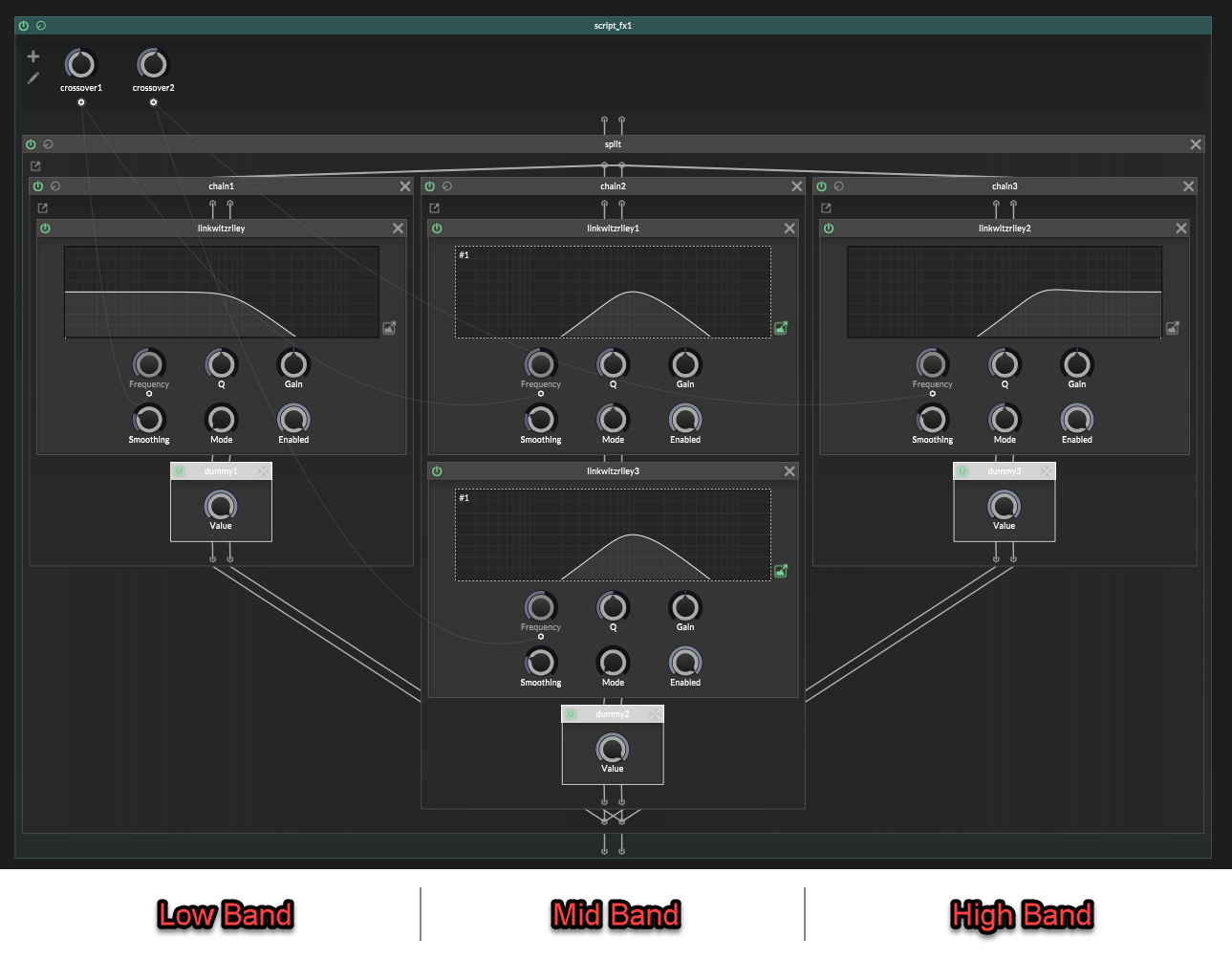
      6cbc85b5-008e-40b1-9d56-eb3419dda181-image.png
      (image note: the middle band filters are a highpass node followed by a lowpass node, they share a linked filter display which is why they both look like a bandpass on the display. That's a drawing of the combined response, but it's actually a separate lowpass and highpass node)


      but when you sum them back together the sound gets hollow.
      The spectrum has a dip!

      It is phase cancellation.
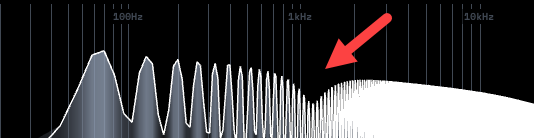
      d31af9ae-ca53-4fc8-9e17-9b6b8327fe4a-image.png

      I actually do have my own custom multiband node for this, that handles everything automatically, with higher quality filters that can be modulated without glitches. And I’ll be releasing that to the forum for free in the future.

      But until then:
      It's actually possible to make a basic splitter in Hise using stock effects.
      So without further ado, lets begin : )

      The mistake

      A multiband splitter does not work if you just:

      • lowpass for the low band
      • bandpass for the middle band
      • highpass for the high band
      • then sum everything back together

      That looks logical, but the filters are not only changing volume.

      They are also changing phase.

      So when the bands recombine, your signals are out of phase with each other and don't add together properly. Part of the signal cancels out and you get a frequency dip.

      That is the hole.


      Building a perfect multiband in ScriptNode
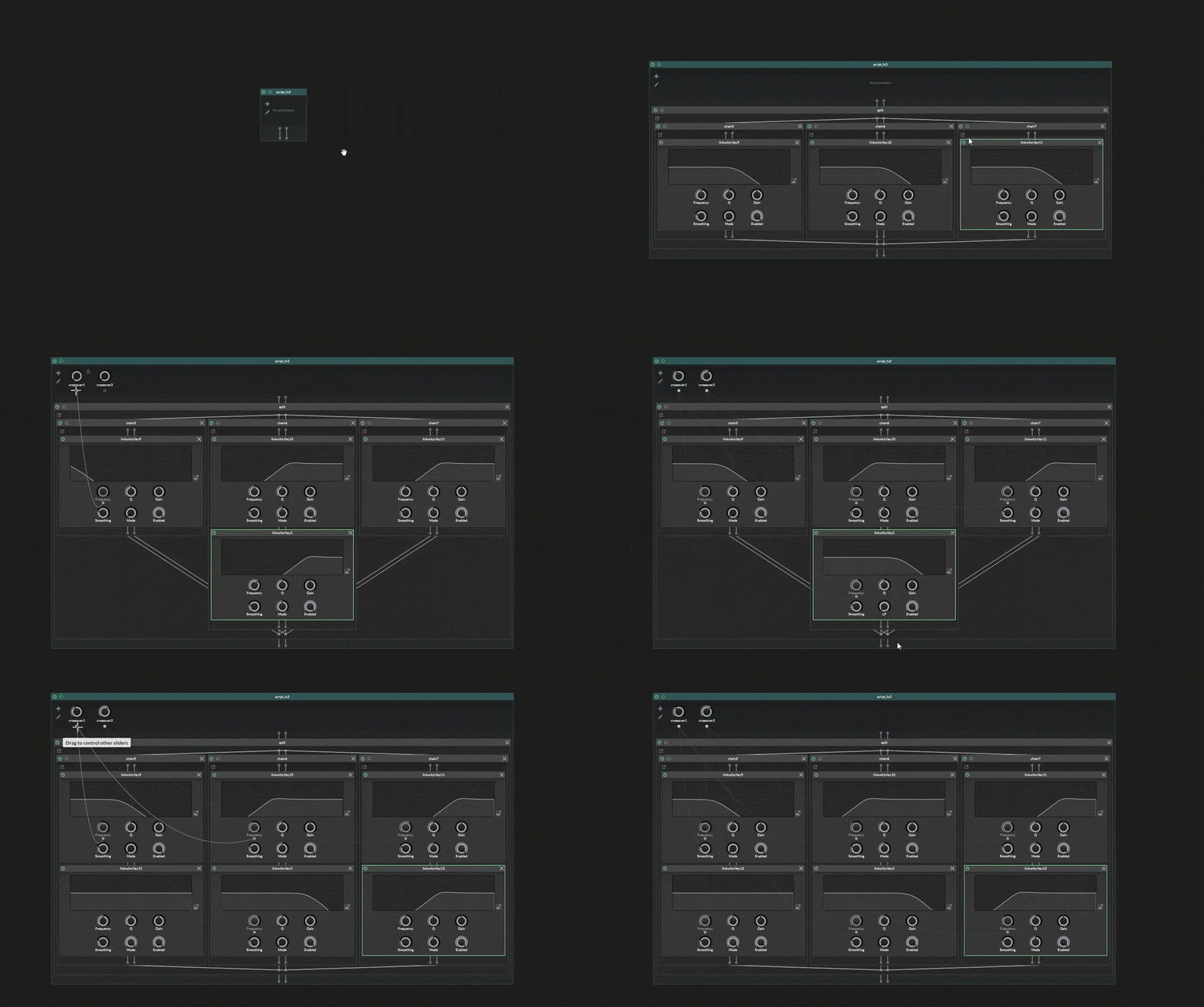

      e735ee21-55b7-4a84-9b63-cc03d0947cab-ezgif-141257e24d046bf1.gif

      Use Linkwitz-Riley filters for the crossover split. In HISE, that means jdsp.jlinkwitzriley.

      In Linkwitz-Riley the LP and HP modes are designed to add back together cleanly when they use the same crossover frequency.

      For 2 bands, it's easy.
      For more than 2 bands, you also need AP mode.
      That is where the annoying part begins.


      The simple case: 2 bands

      A 2-band splitter is just one matched crossover.
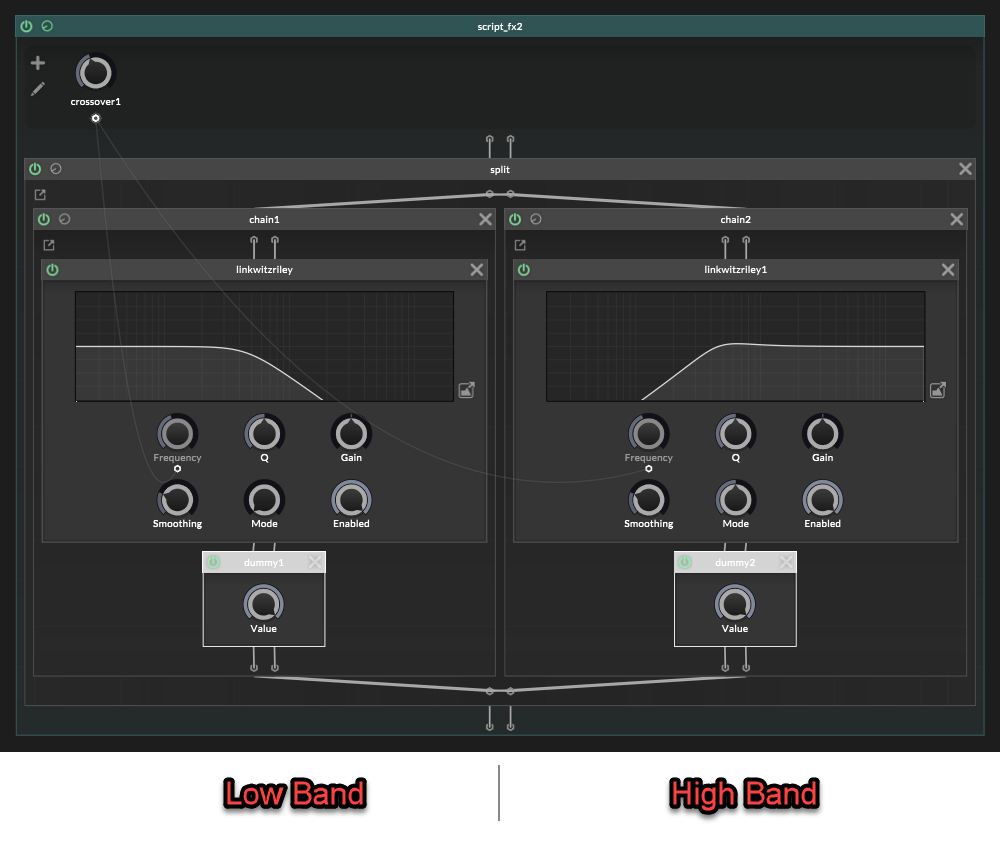
      02afbf8f-5c8b-44b2-a7a8-3dc1dfe75b07-image.png

      That gives you:

      Low:
      LP 1
      
      High:
      HP 1
      

      Both filters use the same crossover frequency.

      Nice and clean. No phase artefacts yet.


      The hard case: more than 2 bands

      The 2-band split is easy because there is only one crossover.
      (One side gets LP 1, the other side gets HP 1, and they are a matched pair).

      With 3 bands or more, it's different.
      This is where the simple setup breaks.

      Lets use 3 bands as an example.
      With 3 bands there are two crossovers:
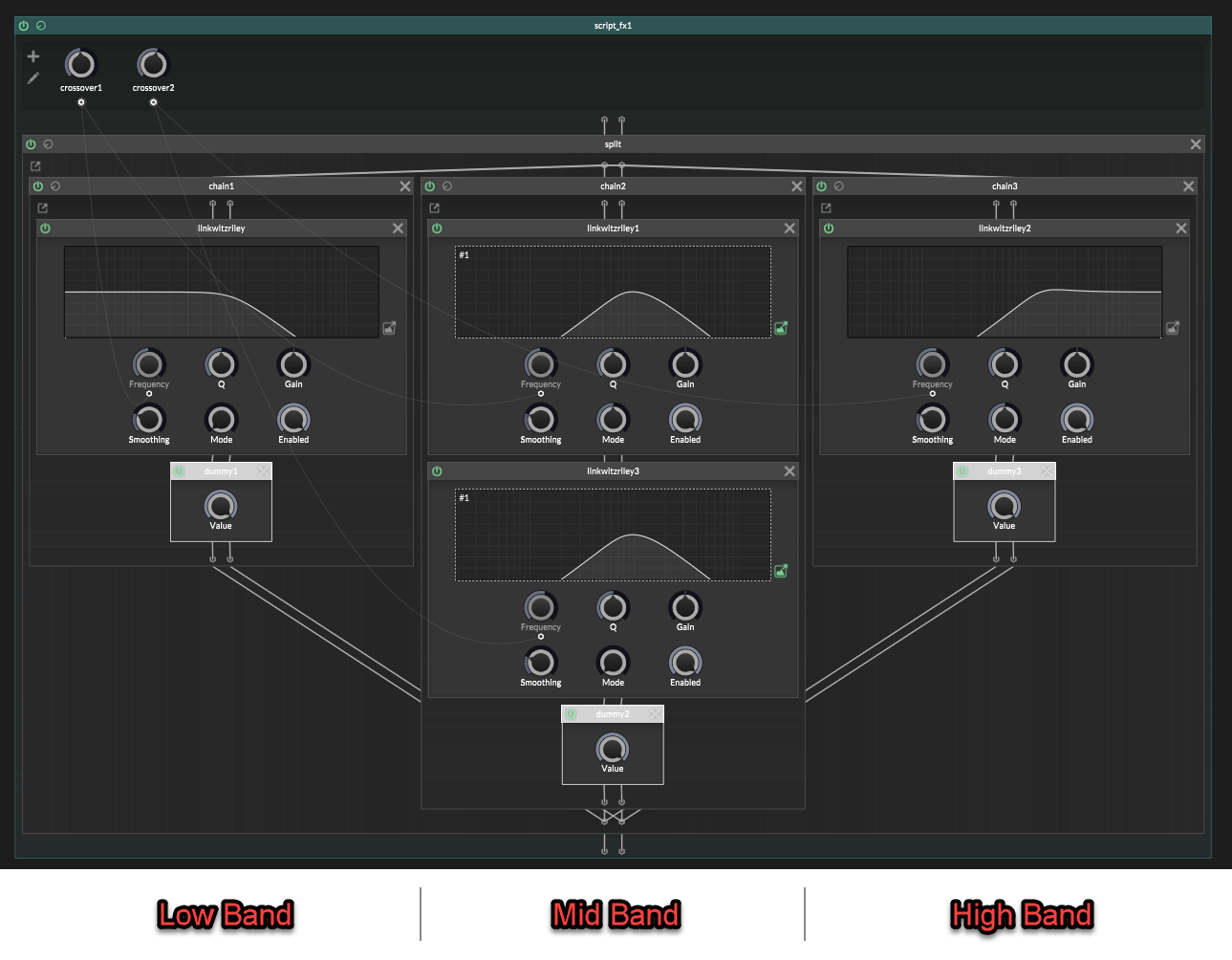
      faec4798-a139-4051-8a68-d7413c9f0e36-image.png

      It is tempting to think this is correct:

      Low:
      LP 1
      
      Mid:
      HP 1 -> LP 2
      
      High:
      HP 2
      

      That looks reasonable at first glance.

      Low is lowpassed.
      Mid is between the two crossovers.
      High is highpassed.

      But the paths are not phase equivalent anymore.

      Filters affect phase, so if one band gets shifted differently from the others, the bands will not line up properly when summed:

      In a 3 band multiband split, we have two crossovers.
      The mid band has already gone through two crossover filter stages:

      Mid:
      HP 1 -> LP 2
      

      But the low and high bands have only gone through one crossover filter stage each.
      That is the mismatch.

      The mid band has been shaped by crossover filter 1 and crossover filter 2, so its phase has moved through both filter stages.

      But In the naïve version, the high band is only:

      High:
      HP 2
      

      That skips crossover 1 completely.

      We need both crossovers to be represented.

      So the high band should be:

      High:
      HP 1 -> HP 2
      

      Not because we want to “highpass it twice” for the sound, but because the high band still needs the phase from crossover 1 and well as crossover 2.

      The low band has the opposite problem.

      It has crossover 1 already:

      Low:
      LP 1
      

      But it does not have crossover 2 at all.

      We do not want to filter the low band with LP 2 or HP 2, because that would change the low band itself.

      We only want it to carry the phase movement from crossover 2.

      That is what an allpass is for in this situation:

      Low:
      LP 1 -> AP 2
      

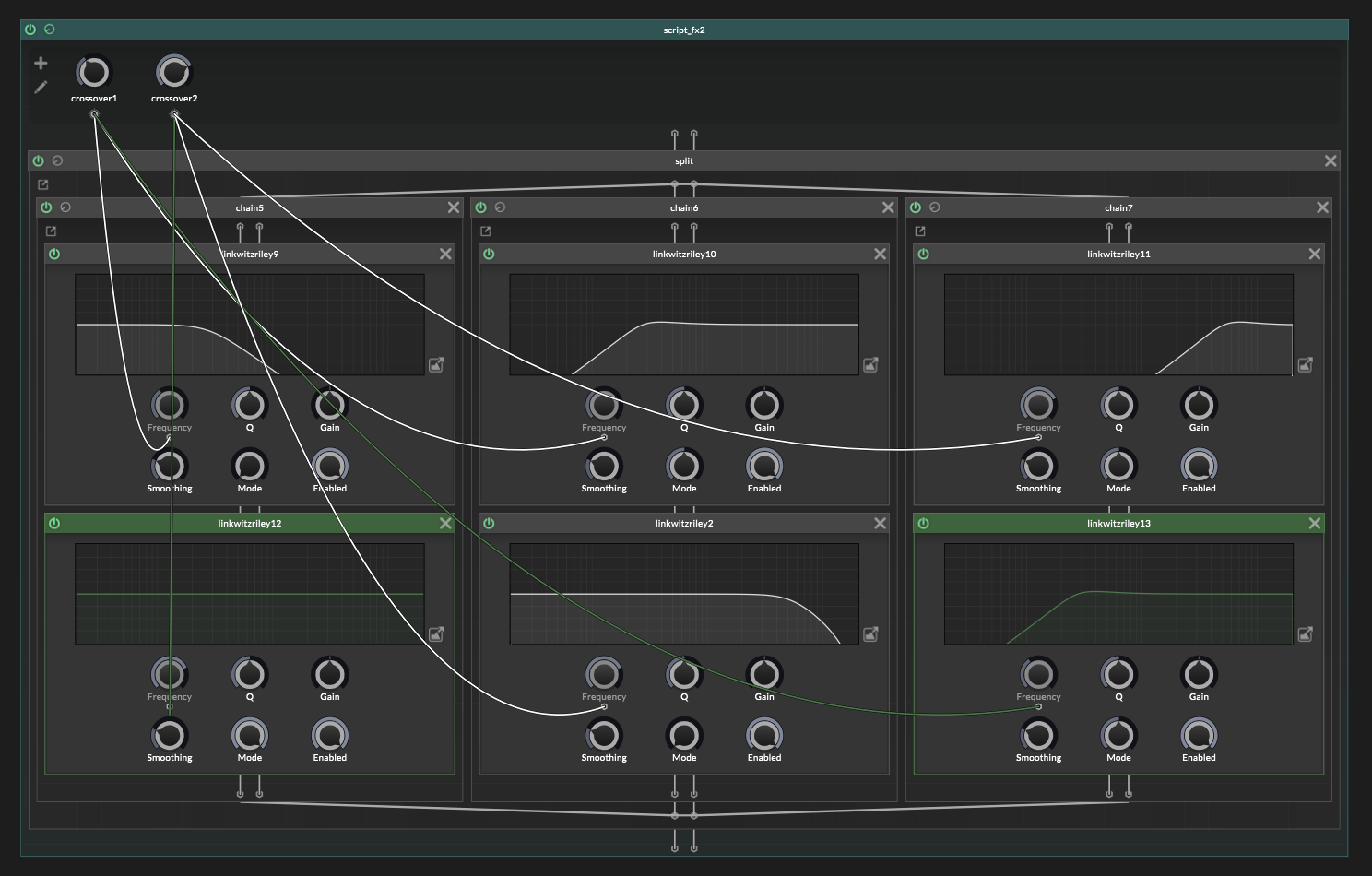
      Now the full 3-band layout is:

      Low:
      LP 1 -> AP 2
      
      Mid:
      HP 1 -> LP 2
      
      High:
      HP 1 -> HP 2
      

      This is the correct layout to copy.
      a4fd7eb8-0227-4640-b851-5e5d7b01fecc-image.png

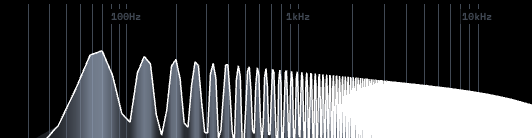
      The allpass is not changing the frequency balance. It is just giving the low path the same phase movement from crossover 2, so everything adds back together properly.

      No more frequency dip! : )
      895d9d21-f183-4d91-bebc-b6c0bd9e3a01-image.png


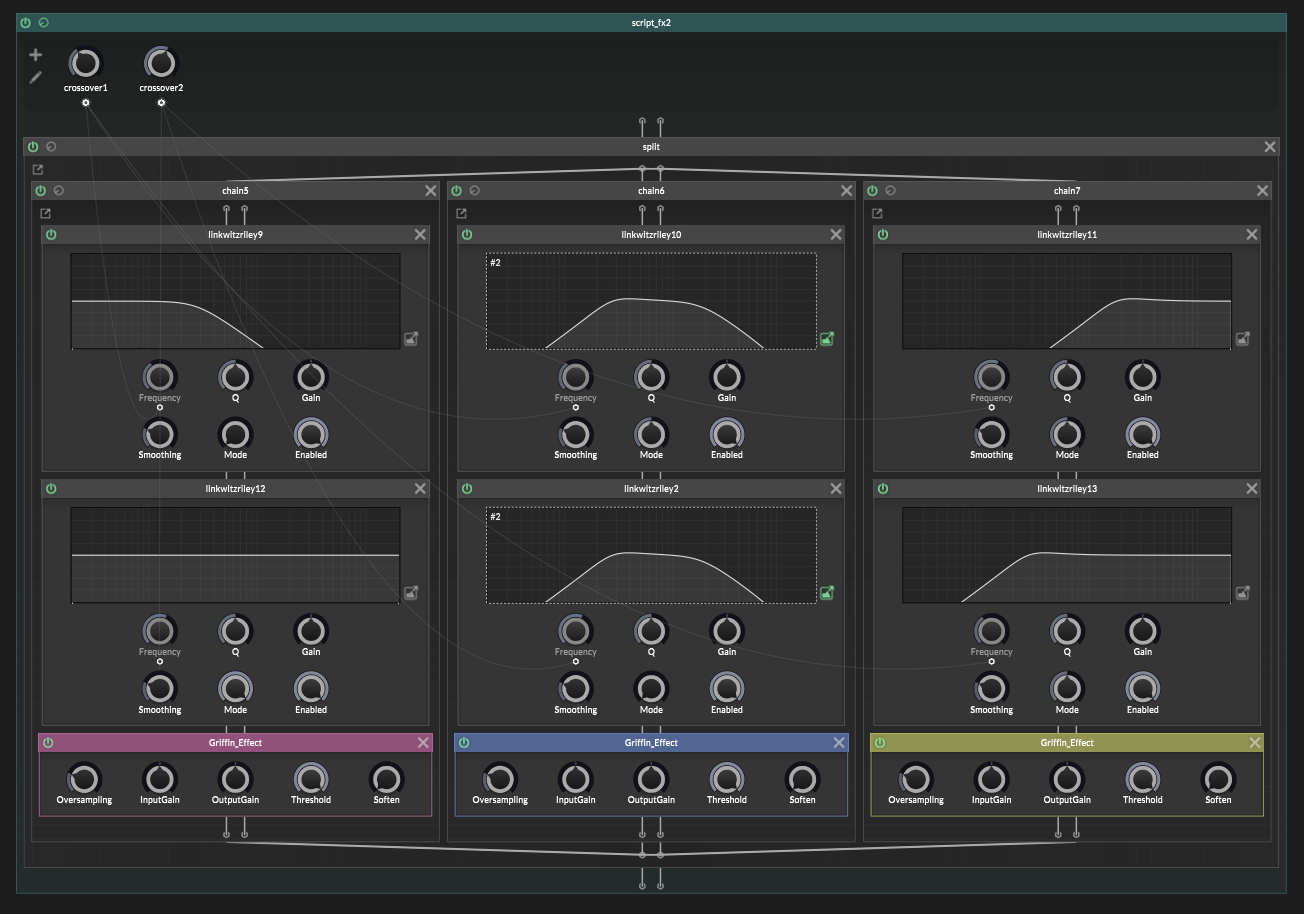
      Add your effects after the splitter

      Once the splitter is correct, add whatever effects you wanted to apply to each band, after the crossover nodes.
      4f2f6c13-3f38-4da1-aaa6-42b86812ee36-image.png


      The generic recipe

      Once you understand the 3-band version, the bigger versions are just more of the same.

      The practical way to do this is to work band by band.

      Each band is one branch in your container.split.

      For each band, you need as many jdsp.jlinkwitzriley filters as crossover frequencies.

      So if you want 6 bands, that means you'll have 5 crossovers, and so each branch should have 5 Linkwitz-Riley filters placed inside it.

      The filter modes change depending on which band you are making.

      For Band "X":

      • add HP filters for every crossover before Band "X"
      • add LP for the crossover at the top of Band "X"
      • add AP filters for every crossover above Band "X"

      The top band is the only exception.

      It has no top cutoff, so it is just HP for every crossover.

      Lets do an example with a 6-band splitter.
      A 6 band splitter has 5 crossovers, so needs 5 filters on each band:

      Band 1:
      LP 1 -> AP 2 -> AP 3 -> AP 4 -> AP 5
      
      Band 2:
      HP 1 -> LP 2 -> AP 3 -> AP 4 -> AP 5
      
      Band 3:
      HP 1 -> HP 2 -> LP 3 -> AP 4 -> AP 5
      
      Band 4:
      HP 1 -> HP 2 -> HP 3 -> LP 4 -> AP 5
      
      Band 5:
      HP 1 -> HP 2 -> HP 3 -> HP 4 -> LP 5
      
      Band 6:
      HP 1 -> HP 2 -> HP 3 -> HP 4 -> HP 5
      

      The HP filters get set to the frequency of the band above the lower crossovers.

      The LP filter gets set to the frequency of the top edge of that band.

      The AP filters are only phase compensation for the higher crossovers and so need those frequencies.

      The rule is not hard.
      But the bookkeeping is a bit fiddly.


      One last trap

      A Linkwitz-Riley multiband split does sum back flat, but it is not phase-identical to the untouched dry signal.

      So be careful with global dry/wet mixing:

      untouched dry signal
      +
      recombined multiband signal
      

      That can create a new cancellation problem after you already fixed the splitter.

      For parallel multiband effects, either mix dry/wet inside the bands, or send the dry path through the same crossover phase path.


      And that's it!
      A native ScriptNode multiband splitter, without the giant spectral bite taken out of it.

      Viola : )


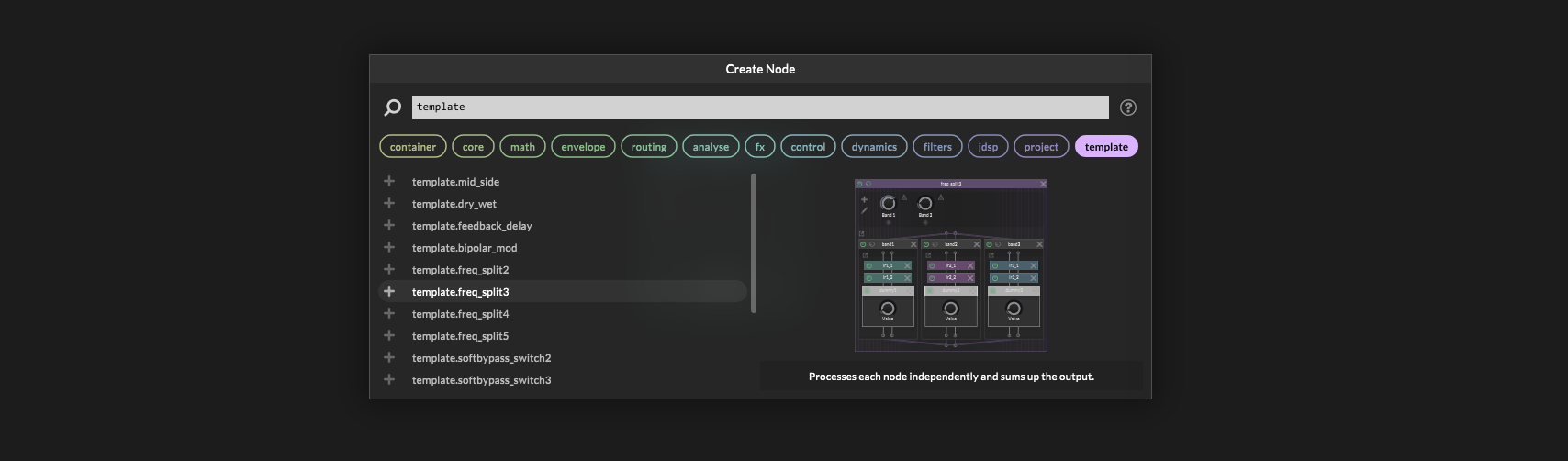
      Extra note: HISE actually has some built-in templates for splitting, but they are set up wrong with mistakes, and so they don't sum together properly!
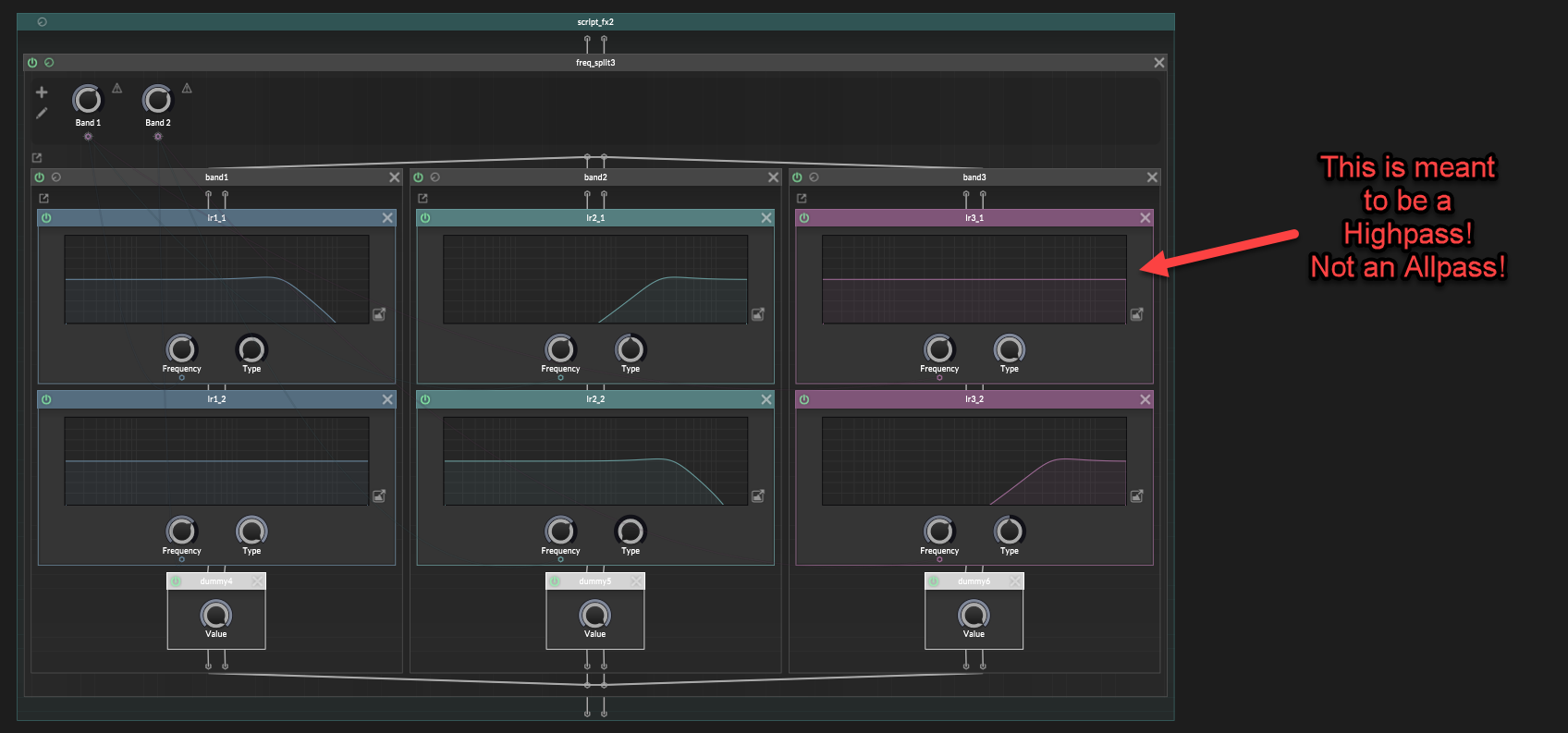
      2ede47c8-58d6-4162-a37d-8a249a996f03-image.png

      6a49b5be-e575-4699-a2b4-03f96533cc47-image.png

      Also, Hise's Linkwitz-Riley filters aren't using modulation safe designs.
      So if you modulate the crossovers you'll get some pretty bad pops and clicks. This isn't due to parameters needing smoothing. This is to do with the way the filters are written internally.

      posted in Blog Entries
      griffinboyG
      griffinboy
    • RE: Goals for 2026? 🚀

      @dannytaurus

      My first plugin will be released at the end of this year
      It's been a few years since I started development on my largest synth which was before pivoting to Hise (It's been 6 years already!? geez), and I think I'm only halfway through developing it still. So it's time to put together a smaller mvp and get something released already! It's been long enough.

      Good luck to everyone

      posted in General Questions
      griffinboyG
      griffinboy

    Latest posts made by griffinboy

    • RE: [Tutorial] How to Multiband in Scriptnode (without artefacts!)

      @ustk

      Yep! A lot of people get caught out with that.
      Because it actually sounds pretty close to correct, if you use an allpass on the high band in the way that Hise's examples do.

      But rather than getting a notch eaten out of your spectrum, this will cause a little bump instead.

      a3da661a-6e5a-4dca-87e1-c7928cd9edd8-image.png

      Which is subtle but it still exists. It's most noticeable when you put two crossovers near the same frequency, you get a dB or more bump in the spectrum.

      posted in Blog Entries
      griffinboyG
      griffinboy
    • RE: Dsp network wont compile: // <--Changed to more relevant title :)

      @Chazrox

      I belive this is the correct branch of Juce you need for Hise now.
      You need to manually place it in the HiseDevelop juce folder before compiling Hise

      https://github.com/christophhart/JUCE_customized

      As @DanH said, this is the thread to look at:
      https://forum.hise.audio/topic/14184/juce-submodule-psa?_=1780482119841

      posted in Scripting
      griffinboyG
      griffinboy
    • RE: [Tutorial] How to Multiband in Scriptnode (without artefacts!)

      @dannytaurus
      I fear I might have explained it badly - only after I started writing this article did I realise how difficult it was to put into words!

      Luckily, Chat GPT exists, and anybody who doesn't have a clue what I'm trying to explain, can hopefully ask GPT to elaborate a bit : )

      posted in Blog Entries
      griffinboyG
      griffinboy
    • [Tutorial] How to Multiband in Scriptnode (without artefacts!)

      I’ve seen a few people try to build multiband chains in ScriptNode and run into the same problem:

      The filters look like they are splitting bands correctly,

      6cbc85b5-008e-40b1-9d56-eb3419dda181-image.png
      (image note: the middle band filters are a highpass node followed by a lowpass node, they share a linked filter display which is why they both look like a bandpass on the display. That's a drawing of the combined response, but it's actually a separate lowpass and highpass node)


      but when you sum them back together the sound gets hollow.
      The spectrum has a dip!

      It is phase cancellation.

      d31af9ae-ca53-4fc8-9e17-9b6b8327fe4a-image.png

      I actually do have my own custom multiband node for this, that handles everything automatically, with higher quality filters that can be modulated without glitches. And I’ll be releasing that to the forum for free in the future.

      But until then:
      It's actually possible to make a basic splitter in Hise using stock effects.
      So without further ado, lets begin : )

      The mistake

      A multiband splitter does not work if you just:

      • lowpass for the low band
      • bandpass for the middle band
      • highpass for the high band
      • then sum everything back together

      That looks logical, but the filters are not only changing volume.

      They are also changing phase.

      So when the bands recombine, your signals are out of phase with each other and don't add together properly. Part of the signal cancels out and you get a frequency dip.

      That is the hole.


      Building a perfect multiband in ScriptNode


      e735ee21-55b7-4a84-9b63-cc03d0947cab-ezgif-141257e24d046bf1.gif

      Use Linkwitz-Riley filters for the crossover split. In HISE, that means jdsp.jlinkwitzriley.

      In Linkwitz-Riley the LP and HP modes are designed to add back together cleanly when they use the same crossover frequency.

      For 2 bands, it's easy.
      For more than 2 bands, you also need AP mode.
      That is where the annoying part begins.


      The simple case: 2 bands

      A 2-band splitter is just one matched crossover.

      02afbf8f-5c8b-44b2-a7a8-3dc1dfe75b07-image.png

      That gives you:

      Low:
      LP 1
      
      High:
      HP 1
      

      Both filters use the same crossover frequency.

      Nice and clean. No phase artefacts yet.


      The hard case: more than 2 bands

      The 2-band split is easy because there is only one crossover.
      (One side gets LP 1, the other side gets HP 1, and they are a matched pair).

      With 3 bands or more, it's different.
      This is where the simple setup breaks.

      Lets use 3 bands as an example.
      With 3 bands there are two crossovers:

      faec4798-a139-4051-8a68-d7413c9f0e36-image.png

      It is tempting to think this is correct:

      Low:
      LP 1
      
      Mid:
      HP 1 -> LP 2
      
      High:
      HP 2
      

      That looks reasonable at first glance.

      Low is lowpassed.
      Mid is between the two crossovers.
      High is highpassed.

      But the paths are not phase equivalent anymore.

      Filters affect phase, so if one band gets shifted differently from the others, the bands will not line up properly when summed:

      In a 3 band multiband split, we have two crossovers.
      The mid band has already gone through two crossover filter stages:

      Mid:
      HP 1 -> LP 2
      

      But the low and high bands have only gone through one crossover filter stage each.
      That is the mismatch.

      The mid band has been shaped by crossover filter 1 and crossover filter 2, so its phase has moved through both filter stages.

      But In the naïve version, the high band is only:

      High:
      HP 2
      

      That skips crossover 1 completely.

      We need both crossovers to be represented.

      So the high band should be:

      High:
      HP 1 -> HP 2
      

      Not because we want to “highpass it twice” for the sound, but because the high band still needs the phase from crossover 1 and well as crossover 2.

      The low band has the opposite problem.

      It has crossover 1 already:

      Low:
      LP 1
      

      But it does not have crossover 2 at all.

      We do not want to filter the low band with LP 2 or HP 2, because that would change the low band itself.

      We only want it to carry the phase movement from crossover 2.

      That is what an allpass is for in this situation:

      Low:
      LP 1 -> AP 2
      

      Now the full 3-band layout is:

      Low:
      LP 1 -> AP 2
      
      Mid:
      HP 1 -> LP 2
      
      High:
      HP 1 -> HP 2
      

      This is the correct layout to copy.

      a4fd7eb8-0227-4640-b851-5e5d7b01fecc-image.png

      The allpass is not changing the frequency balance. It is just giving the low path the same phase movement from crossover 2, so everything adds back together properly.

      No more frequency dip! : )

      895d9d21-f183-4d91-bebc-b6c0bd9e3a01-image.png


      Add your effects after the splitter

      Once the splitter is correct, add whatever effects you wanted to apply to each band, after the crossover nodes.

      4f2f6c13-3f38-4da1-aaa6-42b86812ee36-image.png


      The generic recipe

      Once you understand the 3-band version, the bigger versions are just more of the same.

      The practical way to do this is to work band by band.

      Each band is one branch in your container.split.

      For each band, you need as many jdsp.jlinkwitzriley filters as crossover frequencies.

      So if you want 6 bands, that means you'll have 5 crossovers, and so each branch should have 5 Linkwitz-Riley filters placed inside it.

      The filter modes change depending on which band you are making.

      For Band "X":

      • add HP filters for every crossover before Band "X"
      • add LP for the crossover at the top of Band "X"
      • add AP filters for every crossover above Band "X"

      The top band is the only exception.

      It has no top cutoff, so it is just HP for every crossover.

      Lets do an example with a 6-band splitter.
      A 6 band splitter has 5 crossovers, so needs 5 filters on each band:

      Band 1:
      LP 1 -> AP 2 -> AP 3 -> AP 4 -> AP 5
      
      Band 2:
      HP 1 -> LP 2 -> AP 3 -> AP 4 -> AP 5
      
      Band 3:
      HP 1 -> HP 2 -> LP 3 -> AP 4 -> AP 5
      
      Band 4:
      HP 1 -> HP 2 -> HP 3 -> LP 4 -> AP 5
      
      Band 5:
      HP 1 -> HP 2 -> HP 3 -> HP 4 -> LP 5
      
      Band 6:
      HP 1 -> HP 2 -> HP 3 -> HP 4 -> HP 5
      

      The HP filters get set to the frequency of the band above the lower crossovers.

      The LP filter gets set to the frequency of the top edge of that band.

      The AP filters are only phase compensation for the higher crossovers and so need those frequencies.

      The rule is not hard.
      But the bookkeeping is a bit fiddly.


      One last trap

      A Linkwitz-Riley multiband split does sum back flat, but it is not phase-identical to the untouched dry signal.

      So be careful with global dry/wet mixing:

      untouched dry signal
      +
      recombined multiband signal
      

      That can create a new cancellation problem after you already fixed the splitter.

      For parallel multiband effects, either mix dry/wet inside the bands, or send the dry path through the same crossover phase path.


      And that's it!
      A native ScriptNode multiband splitter, without the giant spectral bite taken out of it.

      Viola : )


      Extra note: HISE actually has some built-in templates for splitting, but they are set up wrong with mistakes, and so they don't sum together properly!

      2ede47c8-58d6-4162-a37d-8a249a996f03-image.png

      6a49b5be-e575-4699-a2b4-03f96533cc47-image.png

      Also, Hise's Linkwitz-Riley filters aren't using modulation safe designs.
      So if you modulate the crossovers you'll get some pretty bad pops and clicks. This isn't due to parameters needing smoothing. This is to do with the way the filters are written internally.
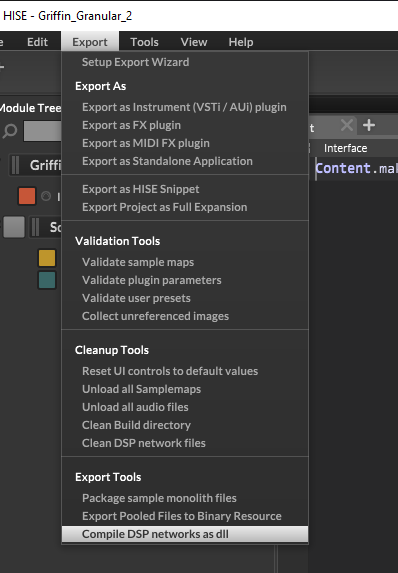
      posted in Blog Entries
      griffinboyG
      griffinboy
    • RE: [Blog] My Favourite C++ Open Source DSP References

      @Orvillain

      Yes, I'm mostly using hardcoded slots myself nowadays rather than scriptnode : )
      There seem to be a few bugs still left with modulation and C++ nodes, but once those are ironed out, this is the way!

      37cf8fbd-fa43-4600-9442-e03516f8e768-image.png

      But I still make scriptnode nodes for other users who are into that workflow.
      And I do think Scriptnode can be good for a fair few things, like when you need a multiband chain:

      40813827-1737-451f-a668-475d67a743f1-image.png

      posted in Blog Entries
      griffinboyG
      griffinboy
    • RE: "Error at node: chain" while 'compiling network to dll'

      @HISEnberg

      Ah missed that! It slipped my mind somehow. thx for mentioning.

      posted in Scripting
      griffinboyG
      griffinboy
    • RE: "Error at node: chain" while 'compiling network to dll'

      @Chazrox

      You're looking for

      Hise Develop

      Snag_a7c86c5.png

      The insides look like this.

      Snag_a7c9684.png

      It's the thing you download / pull from github, and contains all the source for building Hise.

      posted in Scripting
      griffinboyG
      griffinboy
    • RE: "Error at node: chain" while 'compiling network to dll'

      @Chazrox

      Yeah it seems like a deeper issue with your setup.

      If youre not even able to compile simple ones (forget snex, just say, a container and a hise filter) then you've got something wrong with your Hise setup.

      It might be as David says.

      posted in Scripting
      griffinboyG
      griffinboy
    • RE: Custom filter graph output within a custom node?

      @Lindon

      Yeah thats another way to do it!
      Basically the same idea.

      Except like you noted, the Hise filters (which I think are ports of the stock Juce ones?) are primitive, they cramp in the high end of the spectrum (the filter shape get warped near nyquist). And so that's not very nice to see on the graphs.

      Plus, the trouble with analog style filters (if they are actually simulating the hardware topology) is that the cutoff frequency on the knob won't actually line up with the frequency in the real filter, the cutoff frequency on the graph won't really match the real frequency the filter is at internally.

      posted in C++ Development
      griffinboyG
      griffinboy
    • RE: "Error at node: chain" while 'compiling network to dll'

      @Chazrox

      I think it might be a bug, either that or you haven't enabled compilation on the thing you are compiling?

      397b0048-2687-4826-847c-35d0ba88c406-image.png

      This scriftFX chain compiles fine. Its got a container, and a hise filter.
      I haven't tried it with snex, maybe it could even be something specific you've done in your snex node that it doesn't like?

      dba6d83e-3a22-41c7-abbb-0e8050928555-image.png

      posted in Scripting
      griffinboyG
      griffinboy