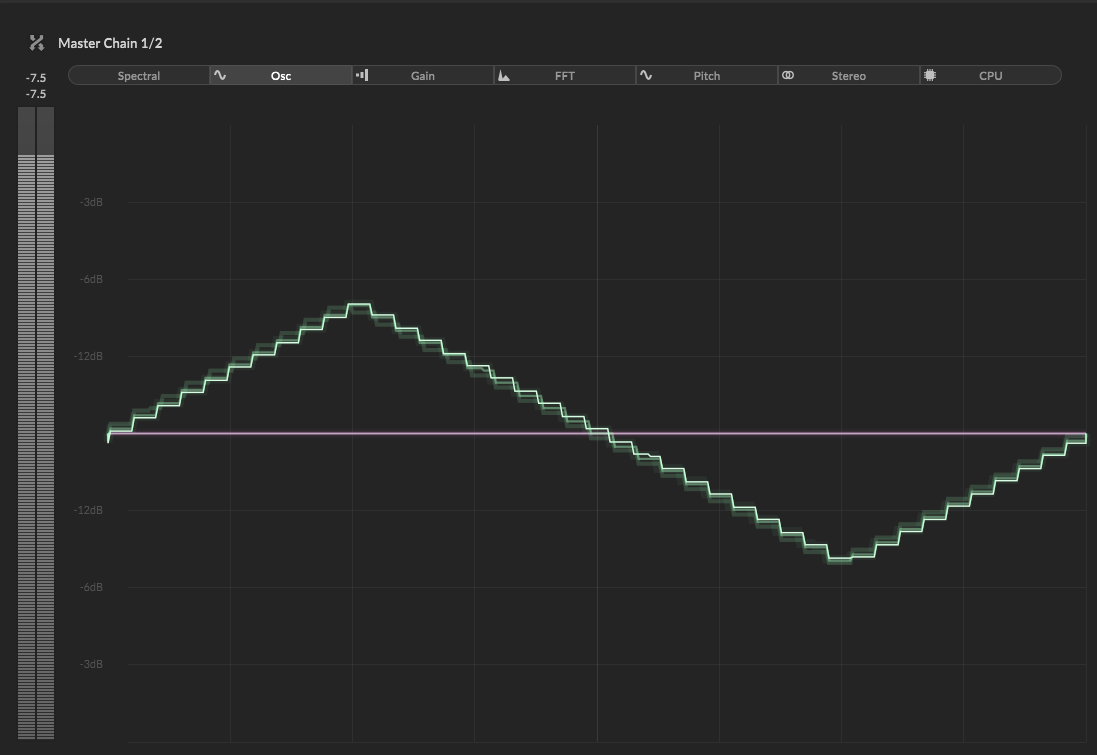
a no - you need to create a third party c++ node template
--> 1.) Go to Tools -> create C++ third party node template
--> 2.) name it EXACTLY: chipTuner
--> 3.) this will create the chipTuner.h file. Open it with Visual Studio or even Notepad and clear everything
--> 4.) Copy the code below into the file, save and close it
--> 5.) back in HISE go to Export-> Compile DSP Networks as DLL
--> 6.) You can now go into the FX Section and load a Hardcoded Master Effect -> there you can choose the chiptuner effect
My advise, play with settings like Bit depth = 4 and SR Reduction = 8
#pragma once
#include <JuceHeader.h>

namespace project
{
    using namespace juce;
    using namespace hise;
    using namespace scriptnode;

    template <int NV> struct chipTuner : public data::base
    {
        SNEX_NODE(chipTuner);
        struct MetadataClass { SN_NODE_ID("chipTuner"); };

        static constexpr bool isModNode() { return false; }
        static constexpr bool isPolyphonic() { return NV > 1; }
        static constexpr bool hasTail() { return false; }
        static constexpr bool isSuspendedOnSilence() { return true; }
        static constexpr int  getFixChannelAmount() { return 2; }

        static constexpr int NumTables = 0;
        static constexpr int NumSliderPacks = 0;
        static constexpr int NumAudioFiles = 0;
        static constexpr int NumFilters = 0;
        static constexpr int NumDisplayBuffers = 0;

        // -------------------------------------------------------------------------
        // Parameter State
        // -------------------------------------------------------------------------
        float bitDepth = 8.0f;   // 1 – 16 Bit
        float srDivider = 1.0f;   // 1 – 32 (sample rate reduction factor)

        // Sample-Hold state
        float holdLeft = 0.0f;
        float holdRight = 0.0f;
        int   holdCounter = 0;

        // -------------------------------------------------------------------------
        // Callbacks
        // -------------------------------------------------------------------------
        void prepare(PrepareSpecs ) { reset(); }

        void reset()
        {
            holdLeft = 0.0f;
            holdRight = 0.0f;
            holdCounter = 0;
        }

        void handleHiseEvent(HiseEvent& ) {}

        template <typename T> void process(T& data)
        {
            static constexpr int NumChannels = getFixChannelAmount();
            auto& fixData = data.template as<ProcessData<NumChannels>>();
            auto fd = fixData.toFrameData();
            while (fd.next())
                processFrame(fd.toSpan());
        }

        template <typename T> void processFrame(T& data)
        {
            // --- Sample Rate Reduction (Sample & Hold) ---
            int divider = jmax(1, (int)srDivider);

            if (holdCounter <= 0)
            {
                holdLeft = data[0];
                holdRight = data[1];
                holdCounter = divider;
            }
            holdCounter--;

            float outL = holdLeft;
            float outR = holdRight;

            // --- Bit Crusher ---

            float steps = std::pow(2.0f, bitDepth) - 1.0f;  // eg 8 Bit → 255 steps
            steps = jmax(1.0f, steps);

            outL = std::round(outL * steps) / steps;
            outR = std::round(outR * steps) / steps;

            data[0] = outL;
            data[1] = outR;
        }

        int handleModulation(double& /*value*/) { return 0; }
        void setExternalData(const ExternalData& /*data*/, int /*index*/) {}


        template <int P> void setParameter(double v)
        {
            if constexpr (P == 0)   // Bit Depth  (1 – 16)
                bitDepth = (float)jlimit(1.0, 16.0, v);

            if constexpr (P == 1)   // SR Divider (1 – 32)
                srDivider = (float)jlimit(1.0, 32.0, v);
        }

        void createParameters(ParameterDataList& data)
        {
            // Bit Depth
            {
                parameter::data p("Bit Depth", { 1.0, 16.0, 1.0 });
                registerCallback<0>(p);
                p.setDefaultValue(8.0);
                p.setParameterValueNames({});
                data.add(std::move(p));
            }
            // Sample Rate Reduction
            {
                parameter::data p("SR Reduction", { 1.0, 32.0, 1.0 });
                registerCallback<1>(p);
                p.setDefaultValue(4.0);
                data.add(std::move(p));
            }
        }
    };
}