[Research Paper] An Efficient Simulation of the EMS VCS3 Filter *updated with audio comparison examples
-
I've been wanting to share some of my R&D for a while -
I'm constantly creating new DSP on commission, but I'm always short on time to talk about it because I am buried under work (the aforementioned R&D).At some point I had the realisation that maybe one of these newer AI agentic models could look at my code and scribbles, and mock up something vaguely paper-shaped from it.
I then edited it by hand to add more details, and check correctness.
The result surprisingly wasn't too bad and I've checked that all the math and facts are correct.
So I'm sharing it here for those who are scientifically inclined, or just interested in the implementation side of this kind of DSP work.At a later date I'll rewrite the paper by hand and post a cleaner version.
Audio comparison companion.
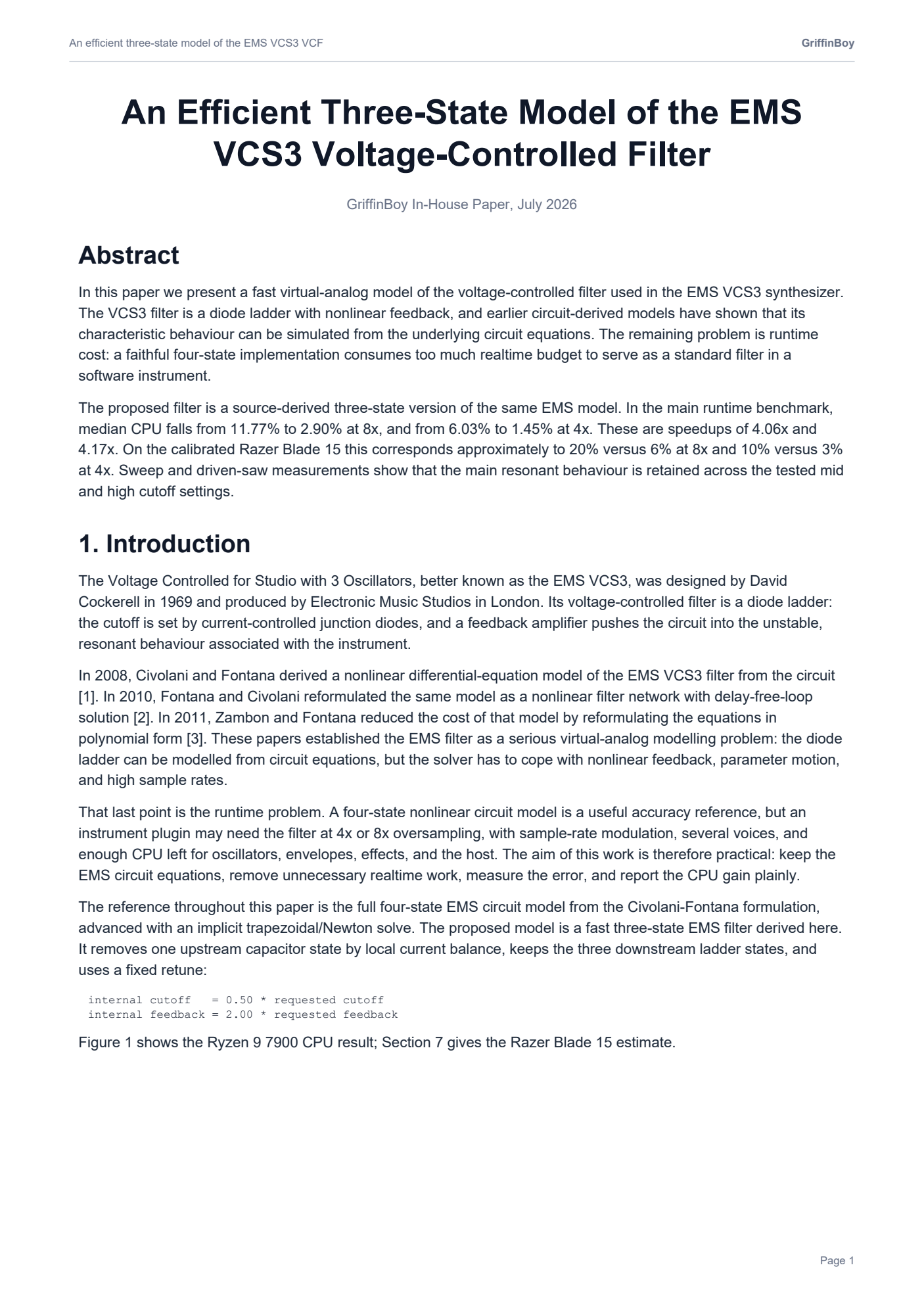
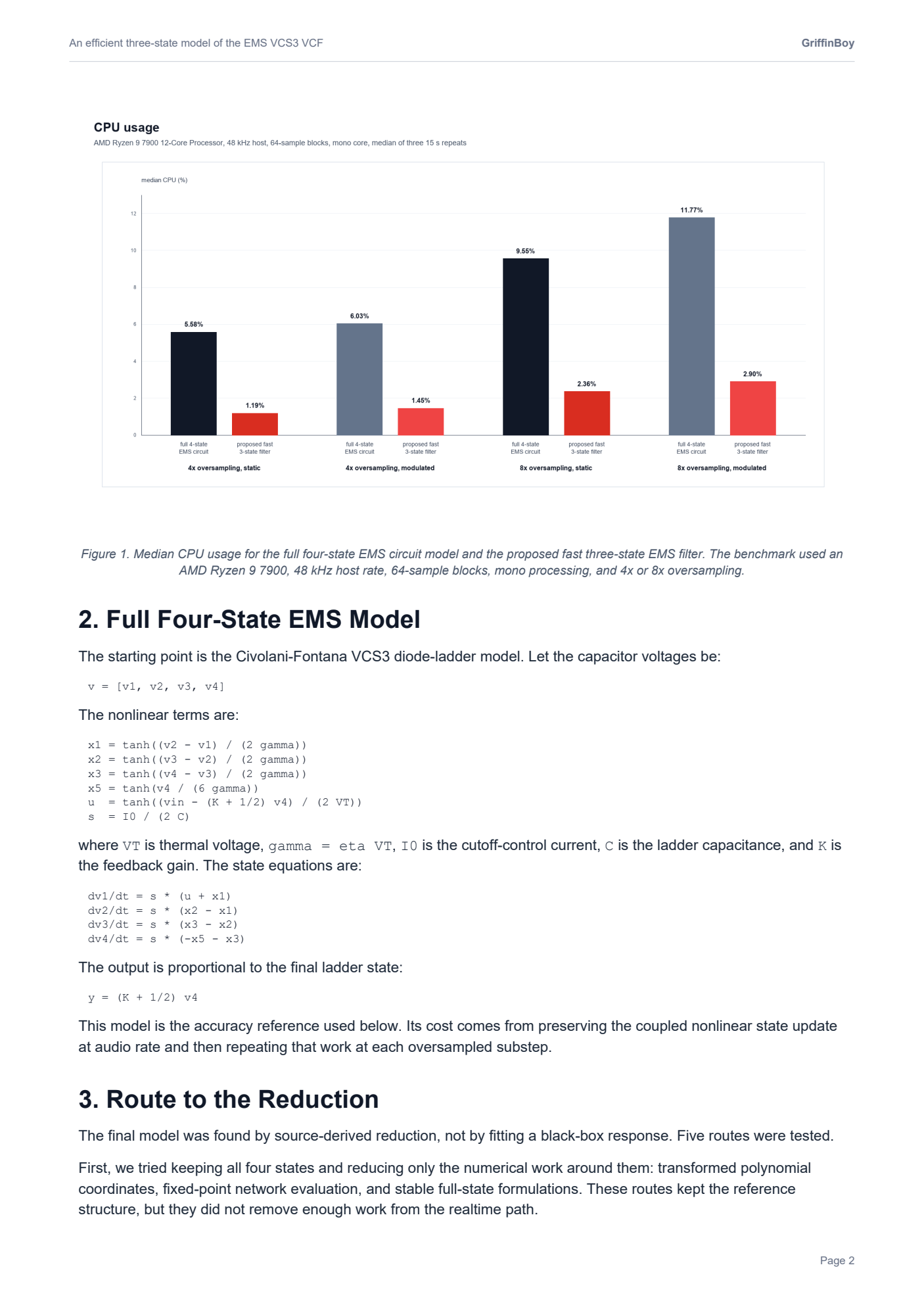
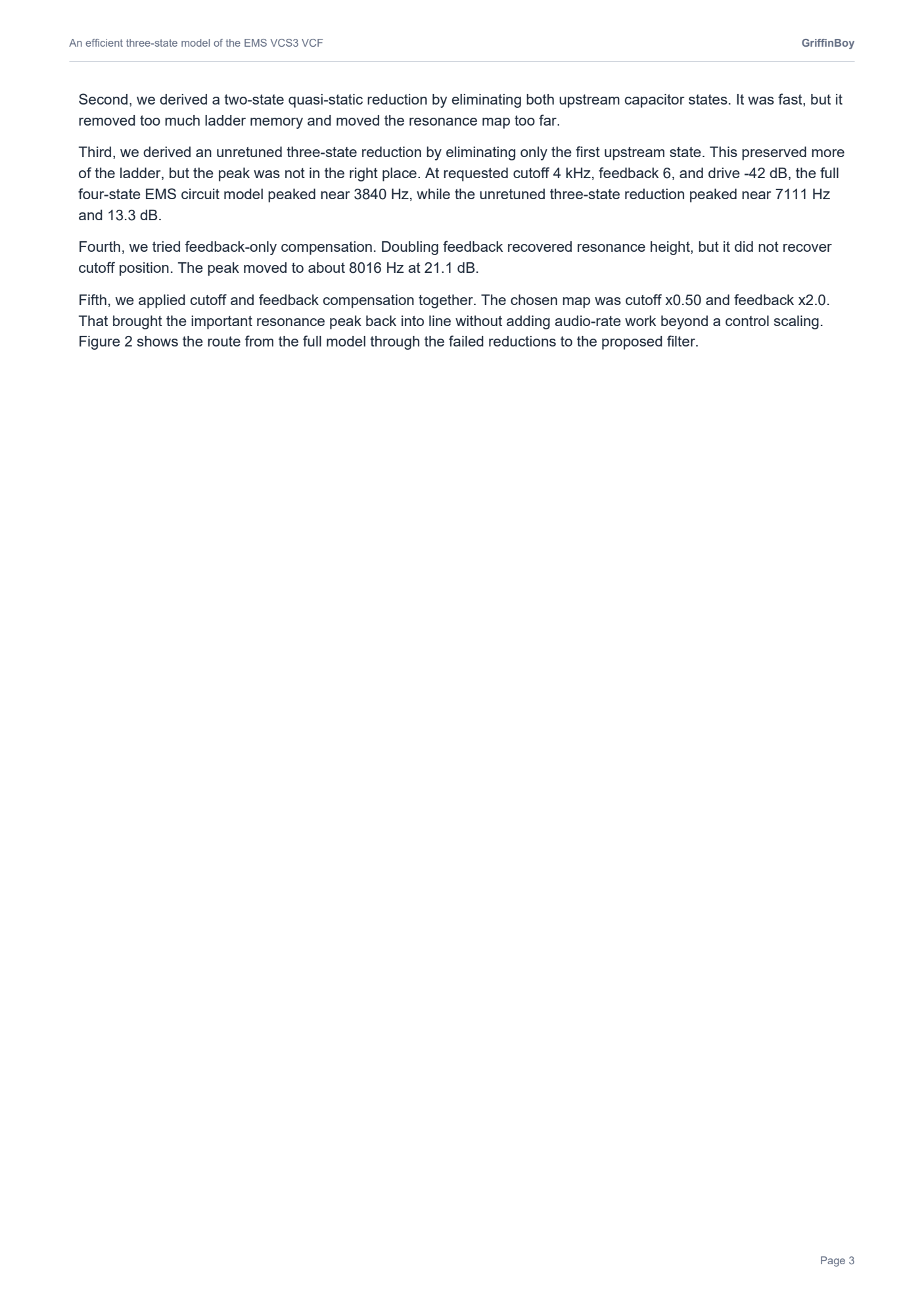
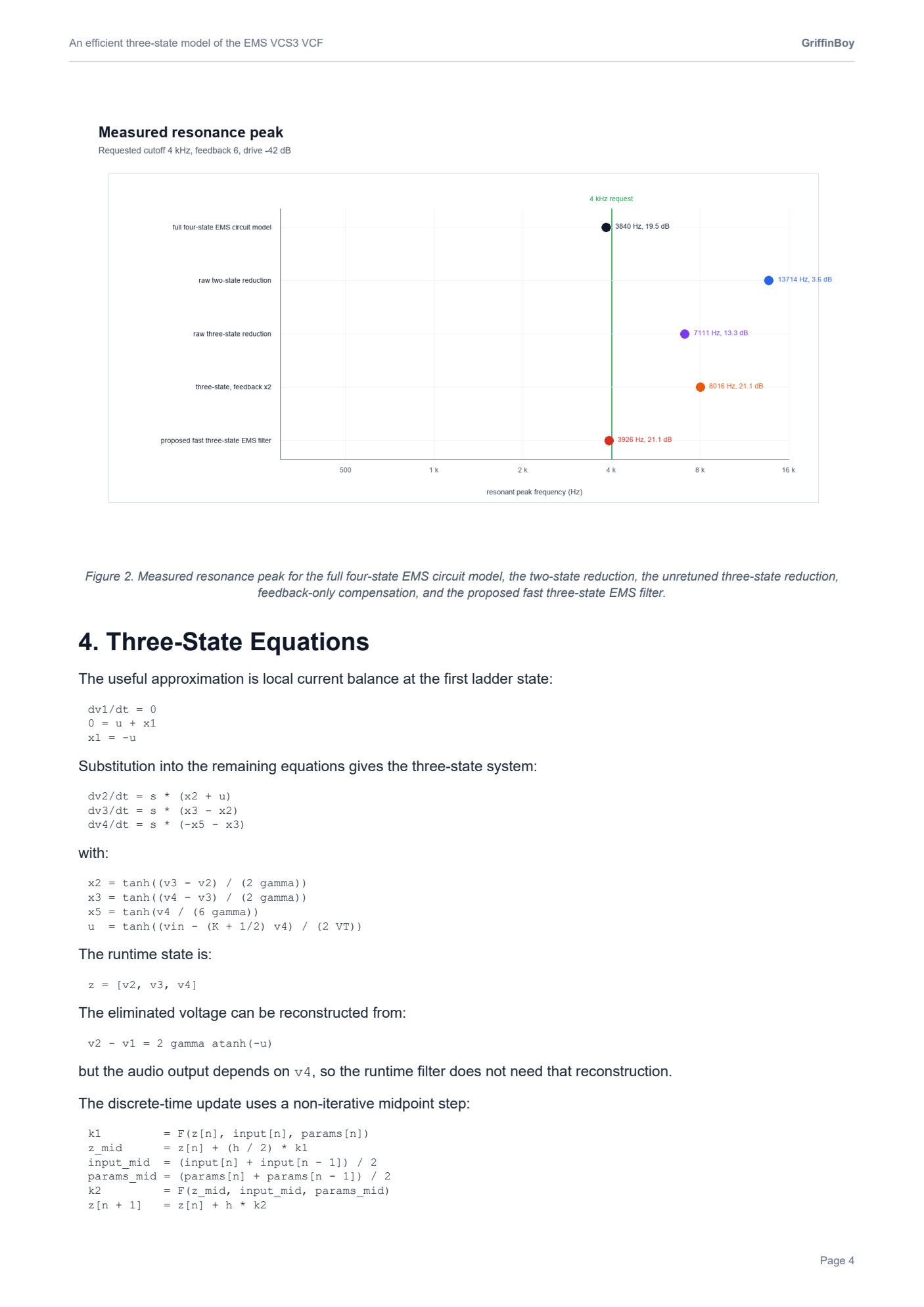
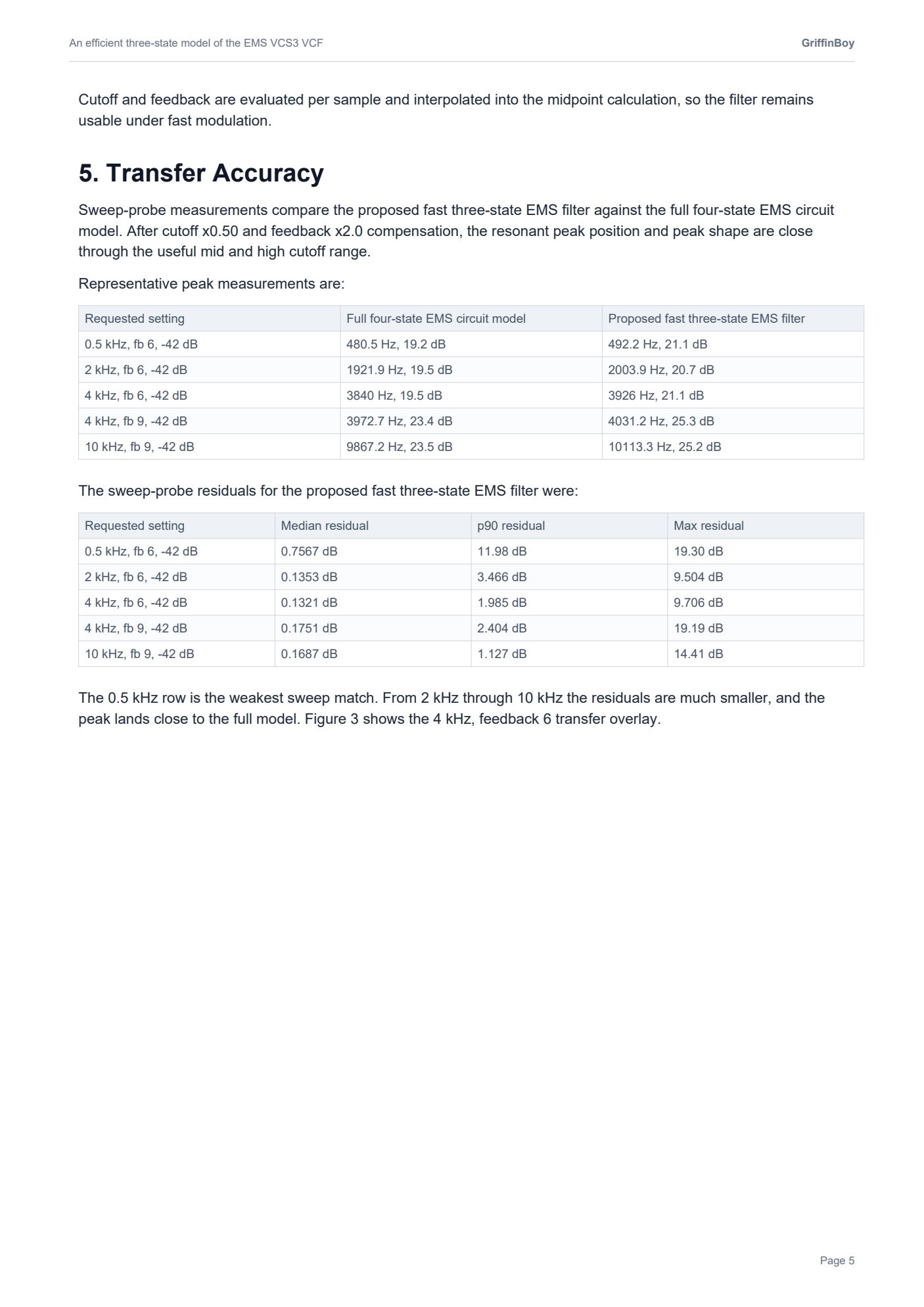
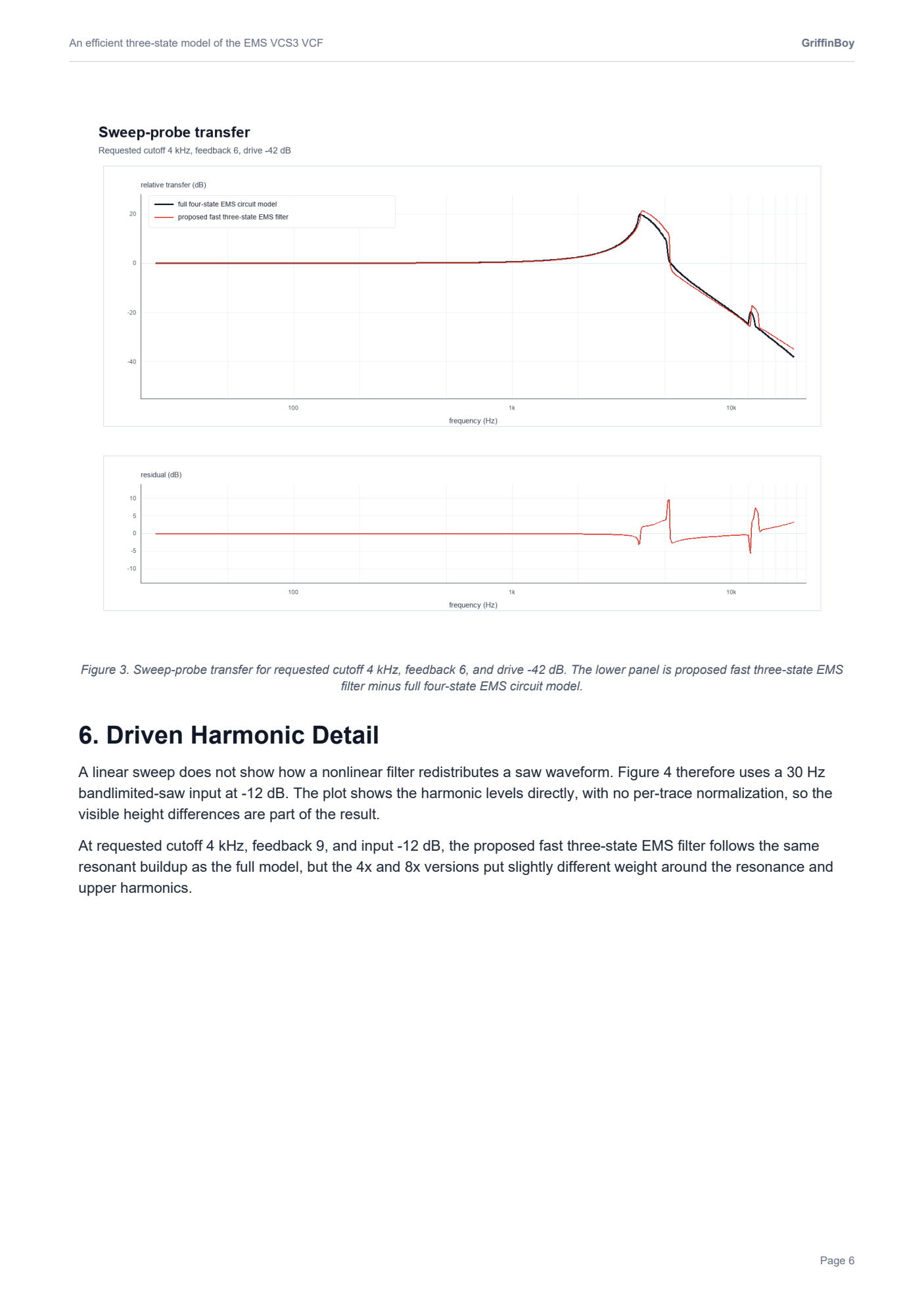
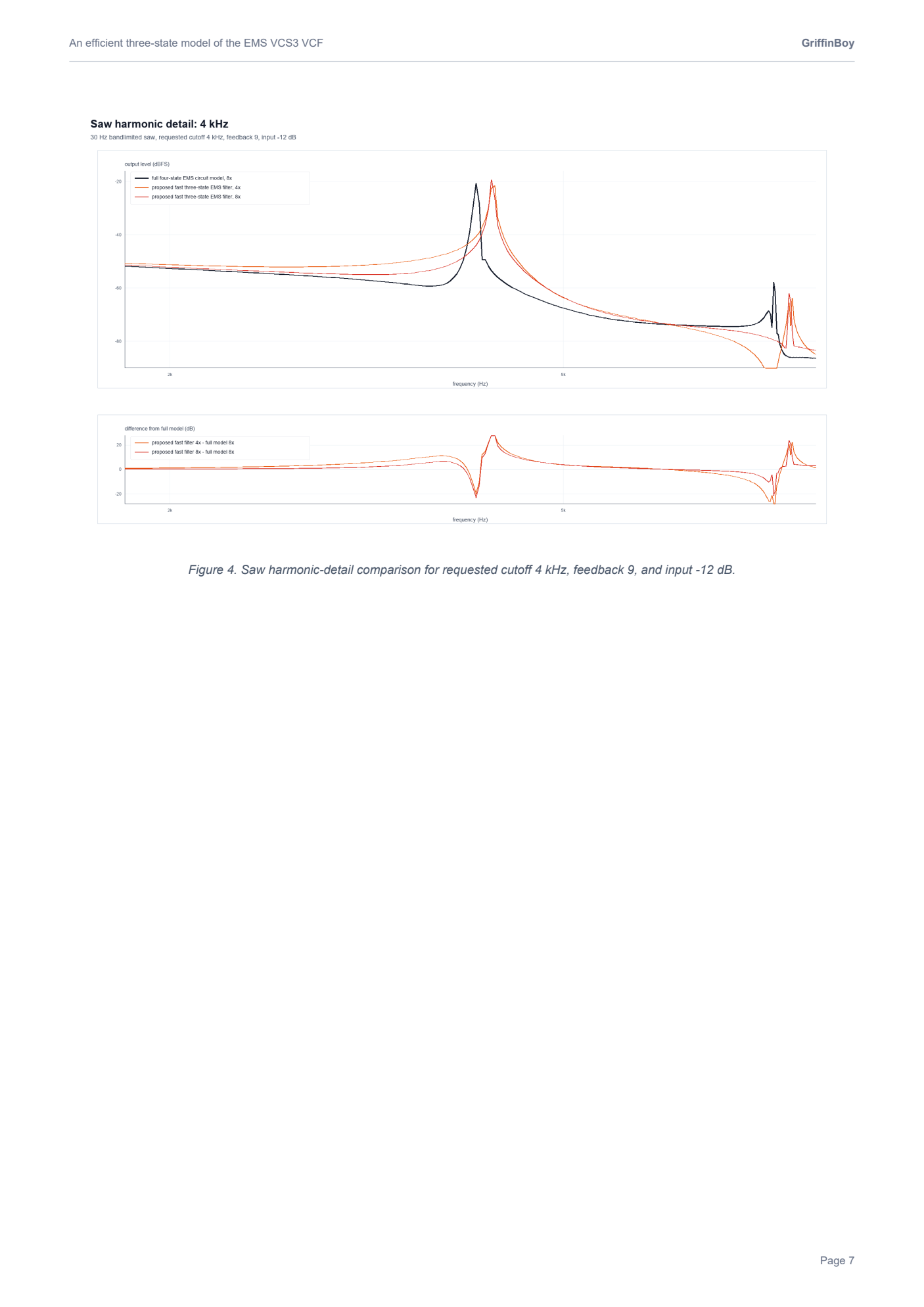
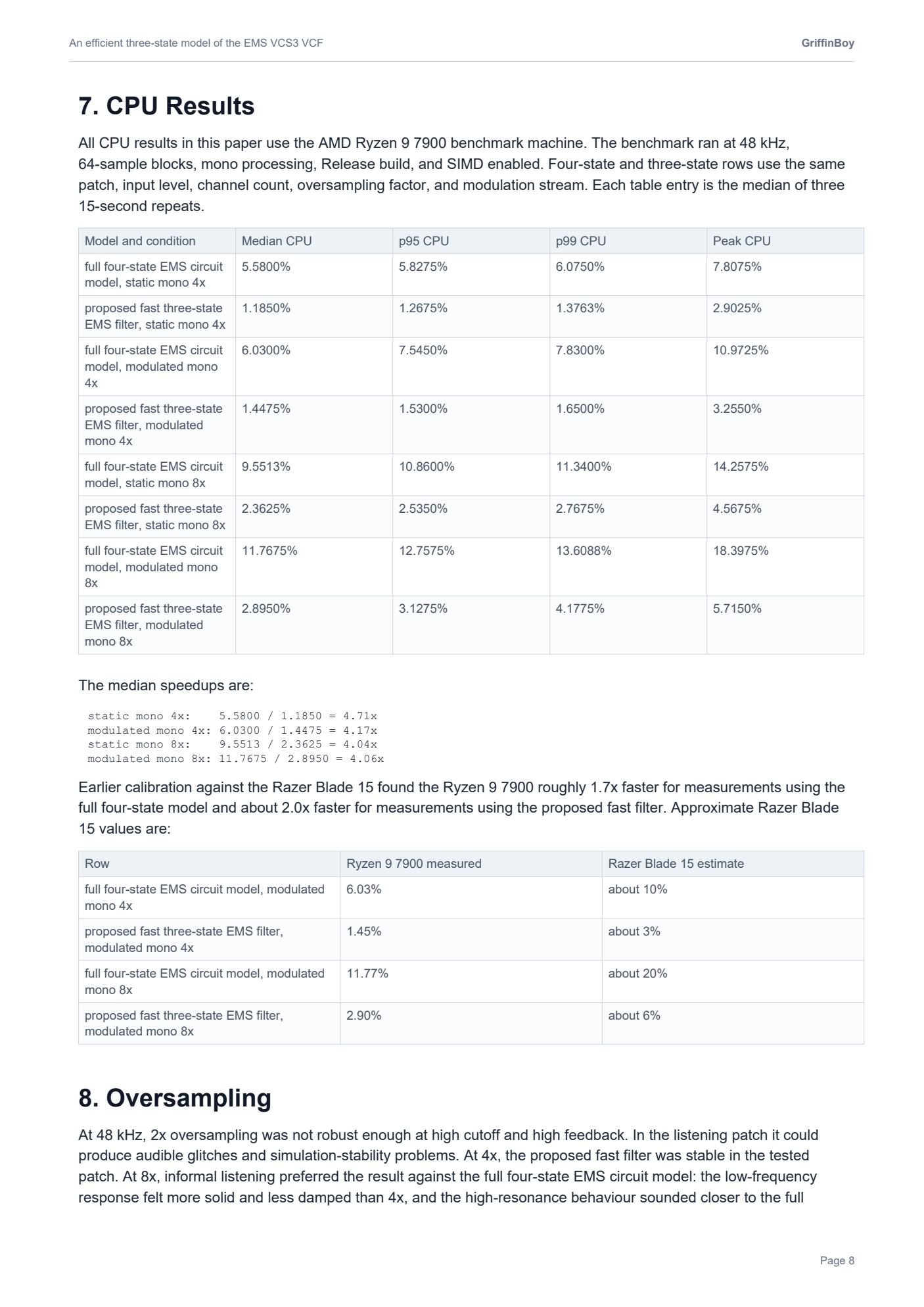
(continues in comments)
-
-
-
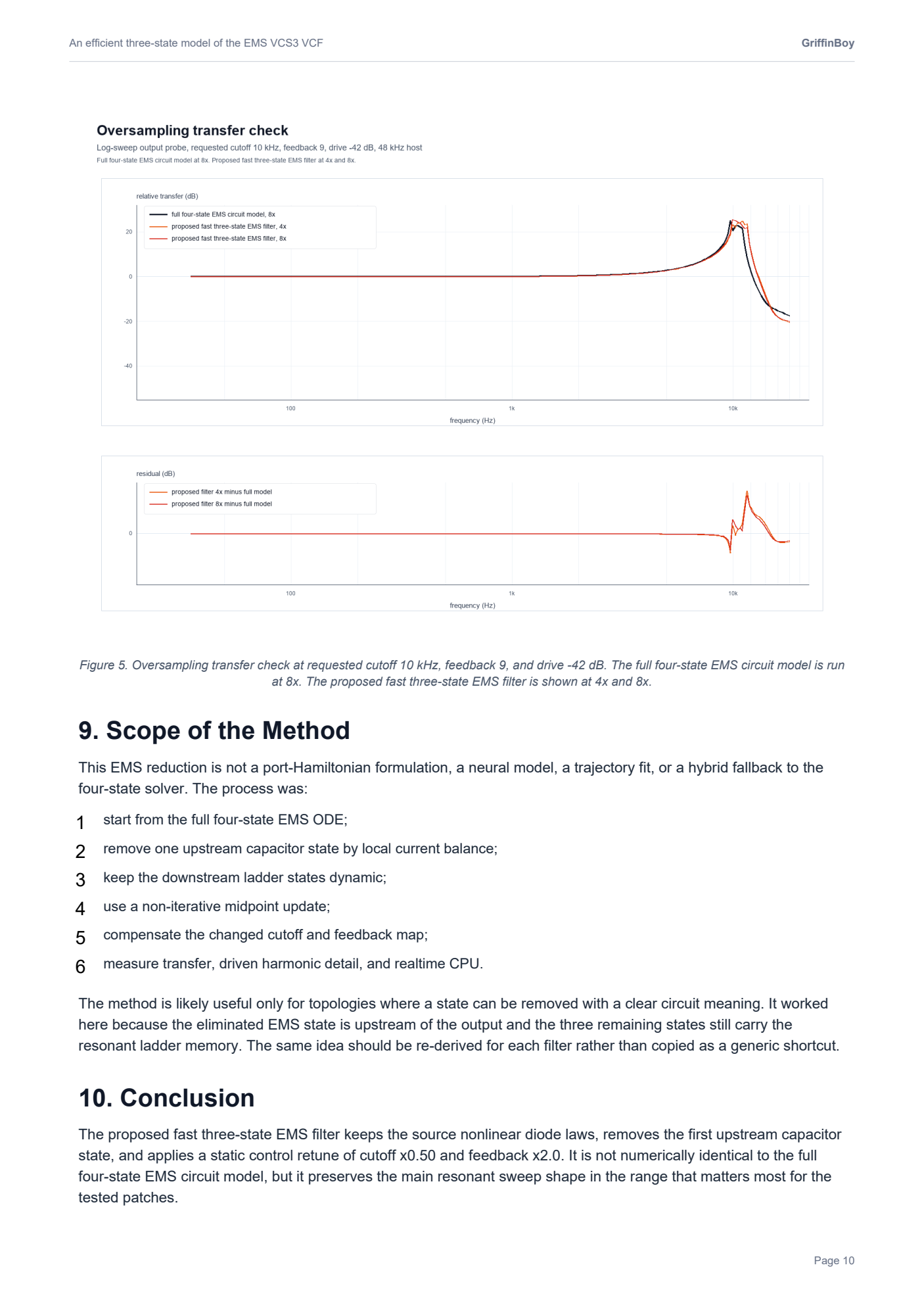
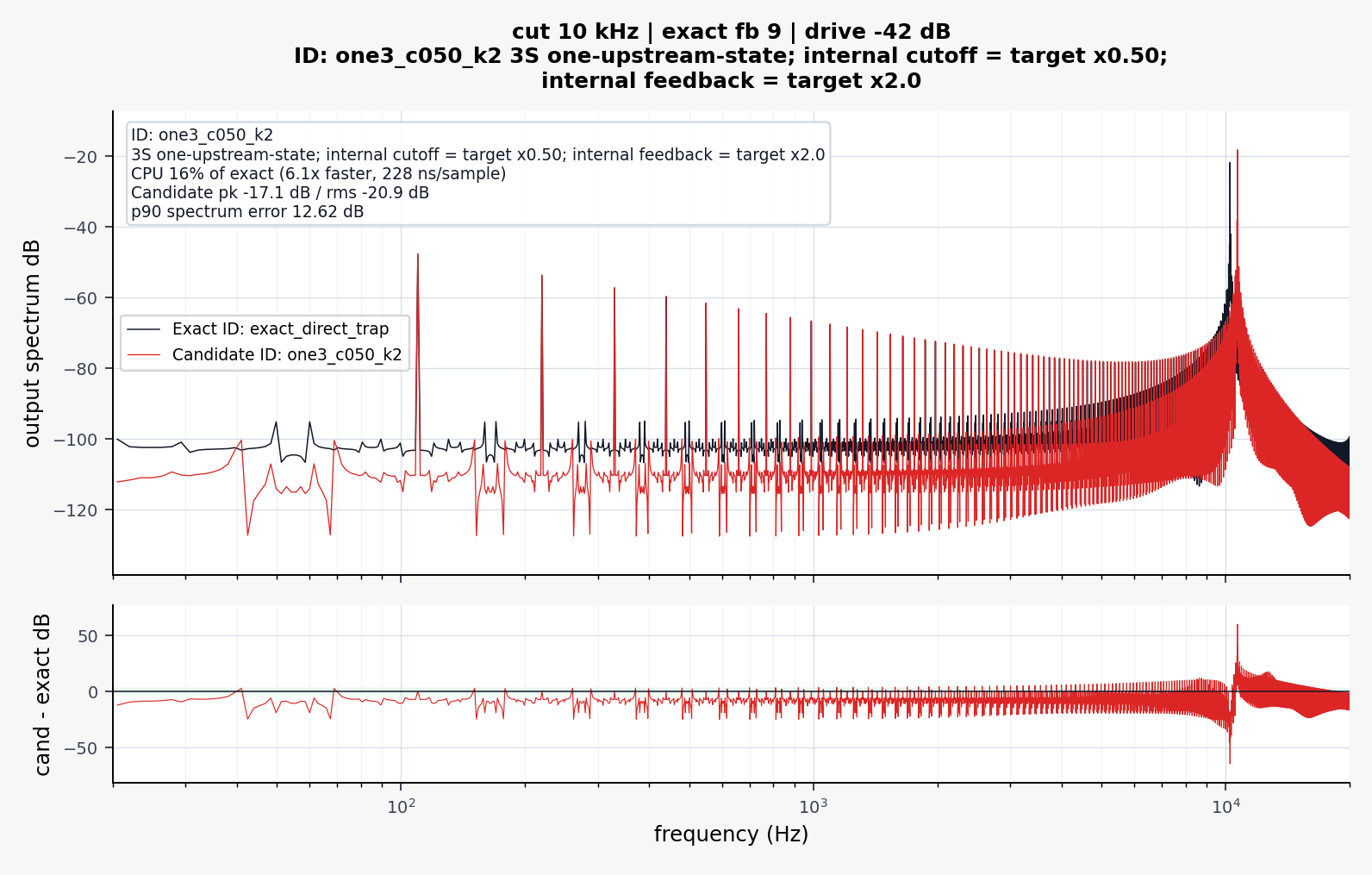
I realized that these plots are a little misleading.
The VCS3 filter is highly nonlinear and "bubbles" and so taking a measurement of frequency response is quite difficult since the filter is moving around on it's own accord all the time...!
Here is a more detailed FFT that shows how the filters do match more closely than the graphics in my paper would suggest.
.
Black is the slow accurate VCS3, Red is my optimized VCS3.
Not oversampled.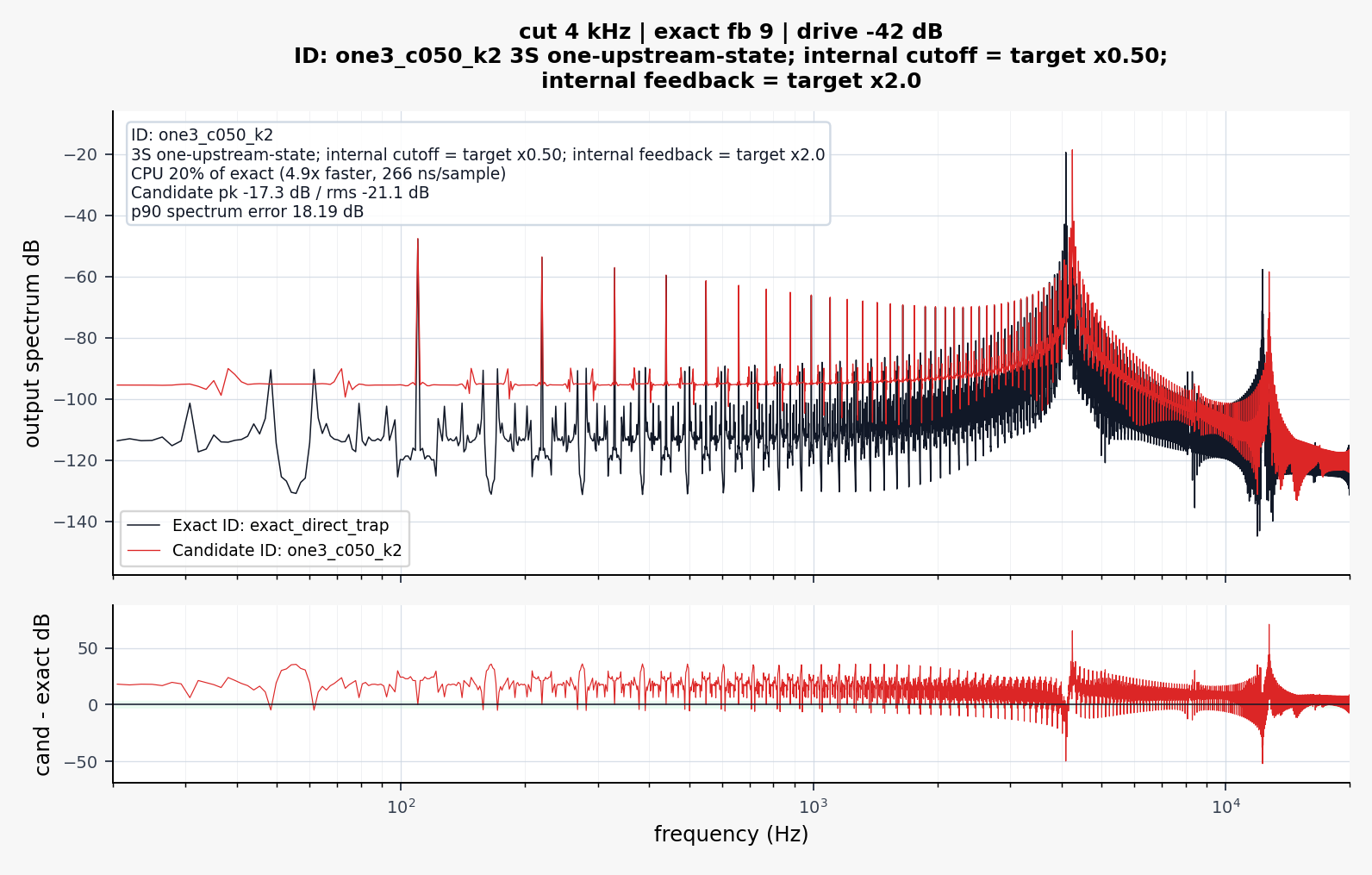
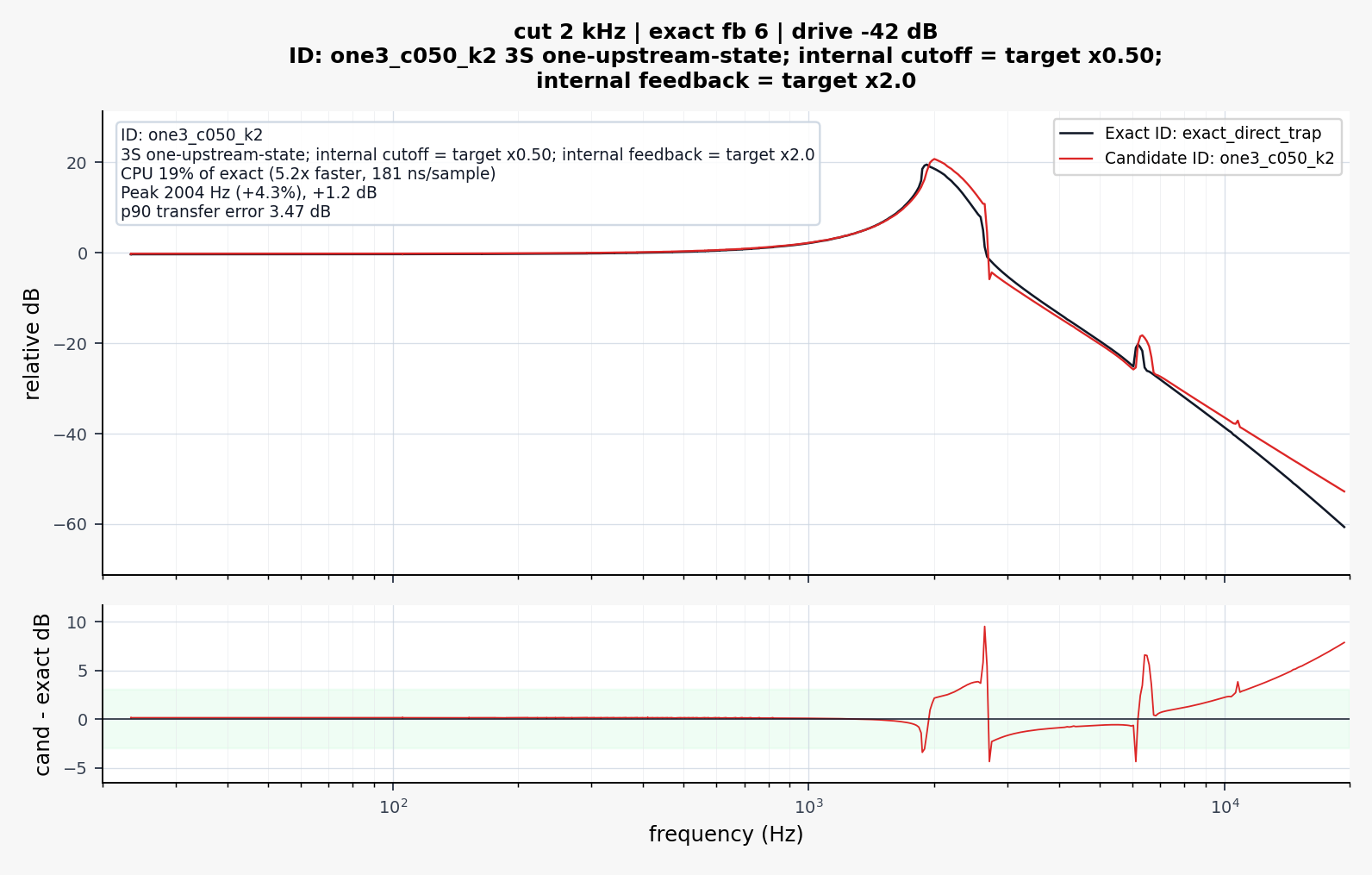
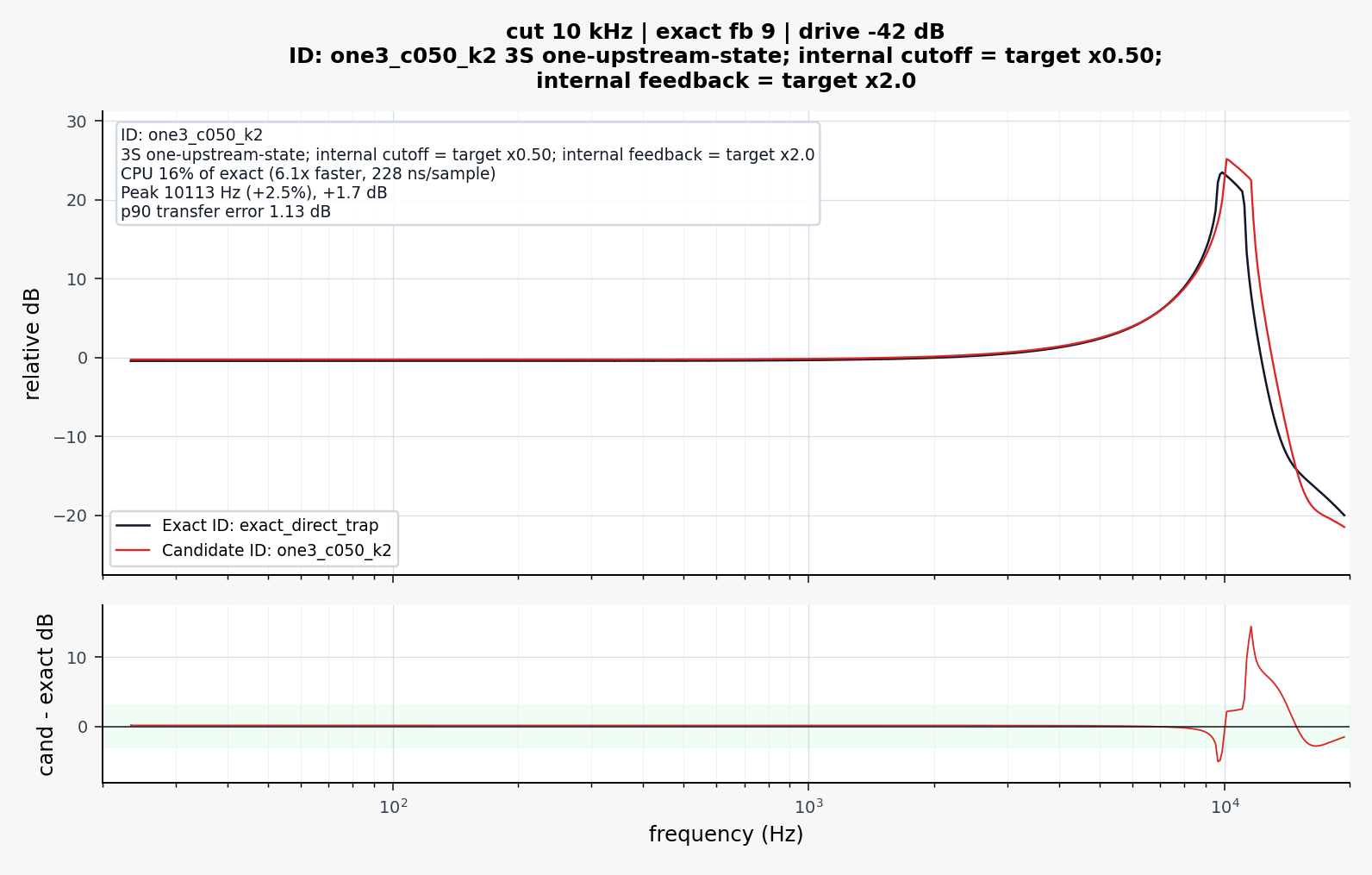
When oversampled, I found the proposed model to be perceptually close to the slower accurate model. The resonance and cutoff and gain values differ slightly, but the important aspects of the filter are retained.
-
This post is deleted!